SHG spectroscopy / microscopy
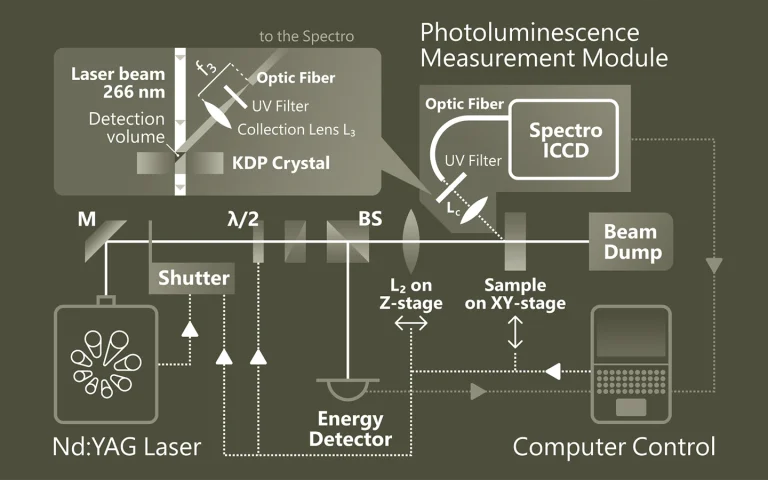
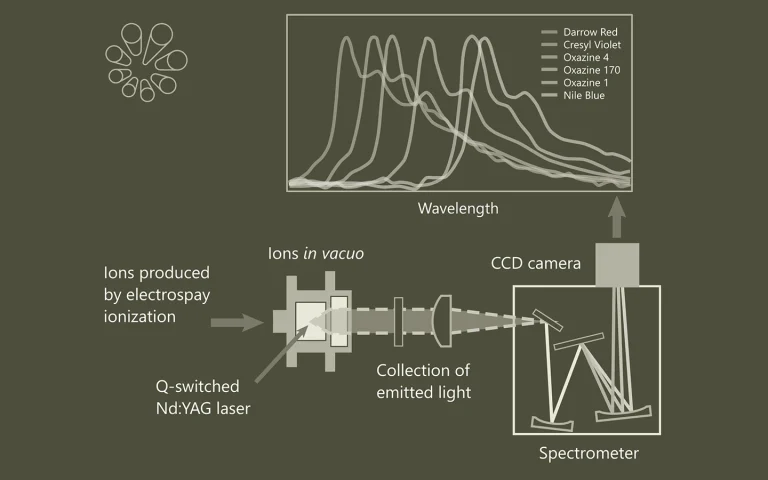
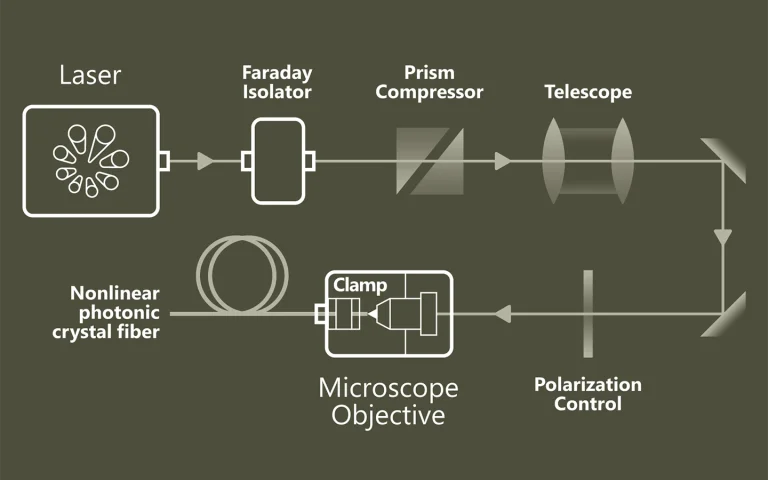
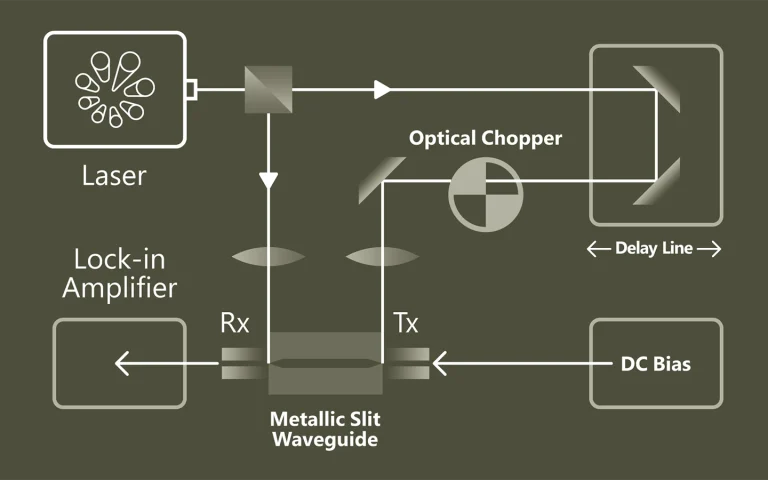
Second harmonic generation (SHG) is a second-order nonlinear optical effect where two photons of frequency ω are converted to one photon of frequency 2ω. SHG is allowed only in media without inversion symmetry. The method is non-invasive, can be applied in situ, and provides real-time resolution.
SHG measurements provide information about surface coverage, molecular orientation, adsorption-desorption processes, and reactions at interfaces. Owing to its high sensitivity, SHG detects low concentrations of analytes such as proteins, peptides, and small molecules, and the second harmonic response can be enhanced by using target molecules resonant with the incident (ω) or second harmonic (2ω) frequencies. Tunable-wavelength lasers allow the incident frequency to be matched to such resonances.
SHG microscopy allows selective probing of non-centrosymmetric areas of a sample. This type of nonlinear optical microscope was first used to observe ferroelectric domains and has since been applied to a variety of specimens, including biological samples. Imaging the endogenous SHG of biological tissue enables selective observation of filament systems with a polar structure, such as collagen, myosin, and microtubules. Imaging the exogenous SHG of a membrane has been reported to detect membrane damage with high sensitivity.

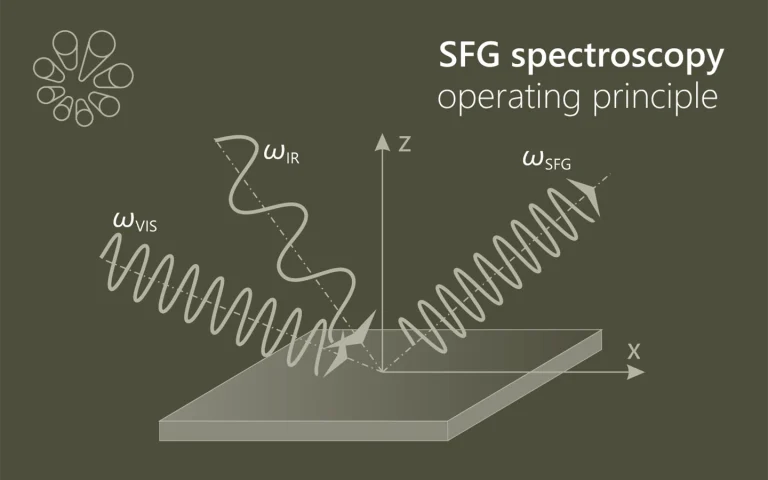
Principle of second harmonic generation (SHG) spectroscopy.