
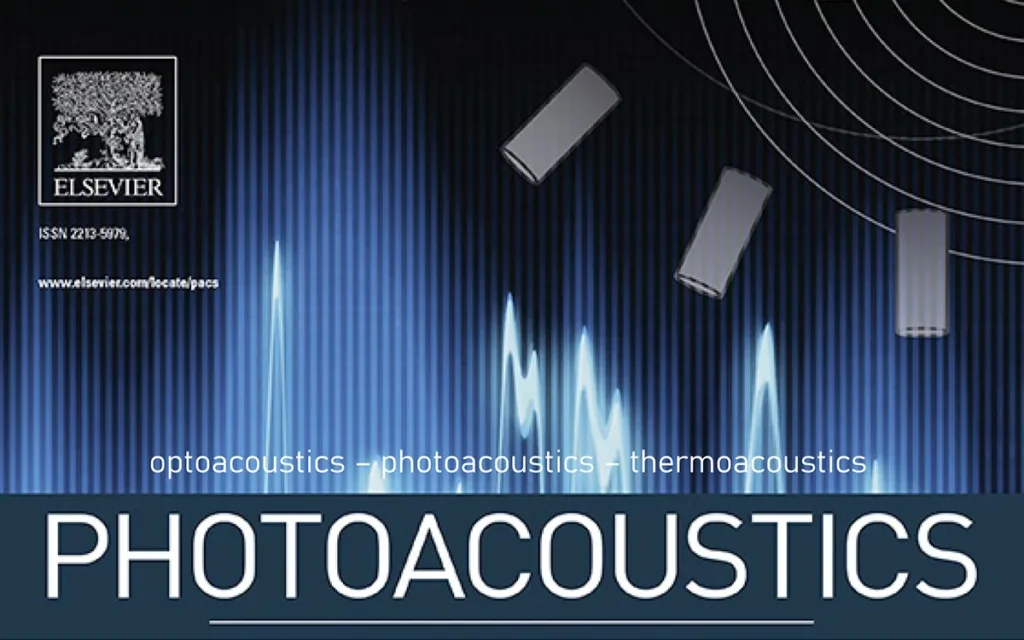
Full-View 3D Photoacoustic and Ultrasound Breast Tomography Published in Photoacoustics
In dense breast tissue, sound travels at different speeds and blurs photoacoustic images. Featured on the cover of Photoacoustics, the PAM3 study shows how mapping sound speed with ultrasound keeps the image sharp, with an EKSPLA PhotoSonus laser providing the multi-wavelength excitation.
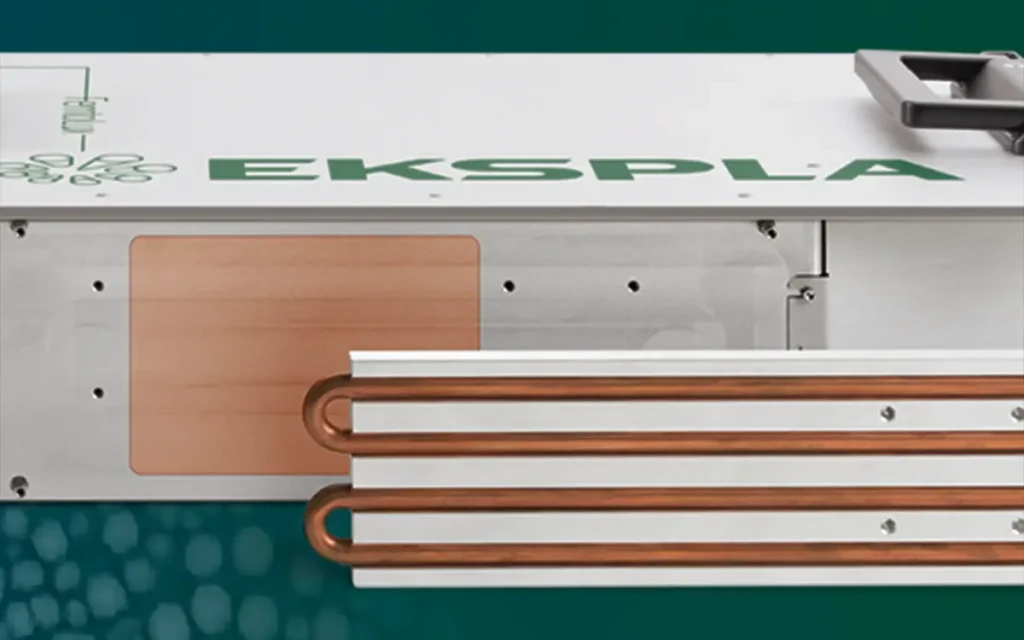
Enhancing System Reliability: How Innovative Dry Cooling Redefines Laser Thermal Management
A laser is only as reliable as its cooling. EKSPLA’s new case study retires the high-maintenance water chiller for a dry cooling system, built on military-grade engineering, that keeps femtosecond lasers running around the clock.

EKSPLA Strengthens Global Presence with New Representative Office in South Korea
Support just got closer for EKSPLA’s customers in South Korea. A new office in Seoul brings local expertise, faster product guidance, and hands-on collaboration to partners across industry and research.

EKSPLA Signs Memorandum of Understanding with CERN
For over a decade, EKSPLA lasers have helped calibrate CERN’s most precise measurements. A new Memorandum of Understanding deepens that partnership, opening the door to projects like the Future Circular Collider.

EKSPLA Expands Representative Network in Four Countries
EKSPLA is growing closer to its customers in four more markets. New representatives in China, Japan, South Korea, and Italy now support sales and servicing of EKSPLA’s scientific and industrial lasers.

EKSPLA’s Dry Cooling Technology Featured on the Cover of Photonics Spectra
Poor cooling can drift a laser’s wavelength and shorten its life. In its Photonics Spectra cover story, EKSPLA shows how direct refrigerant cooling (DRC) brings higher efficiency and lasting stability.
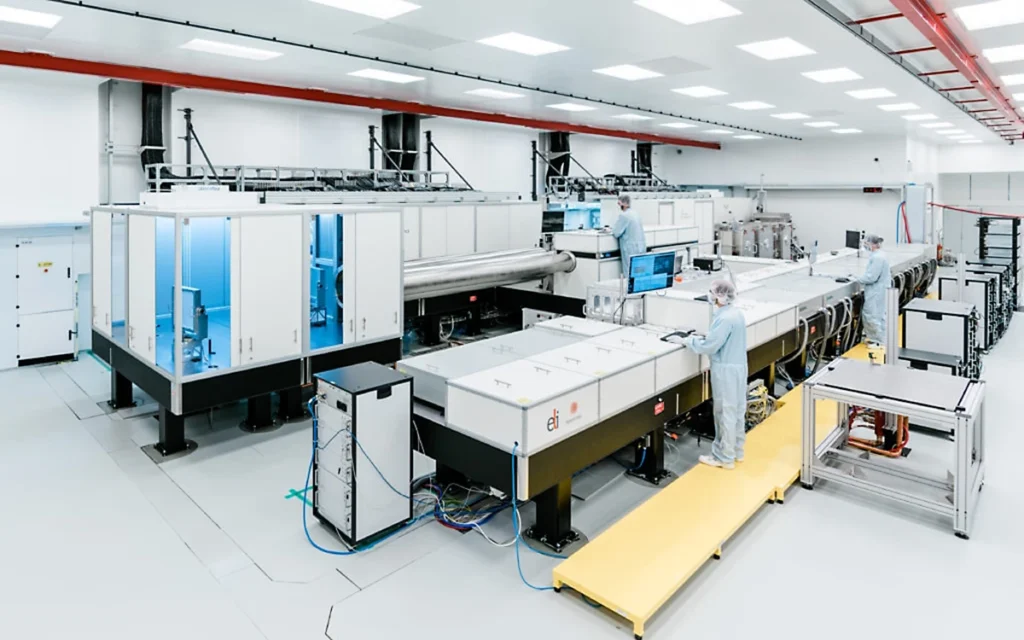
ELI’s L4 ATON Laser Achieves 5 Petawatt
The L4 ATON laser fired one shot a minute at 5.1 petawatts, one million billion watts. Built by EKSPLA with National Energetics and ELI Beamlines, it reached the world’s highest pulse energy at the multi-petawatt level.
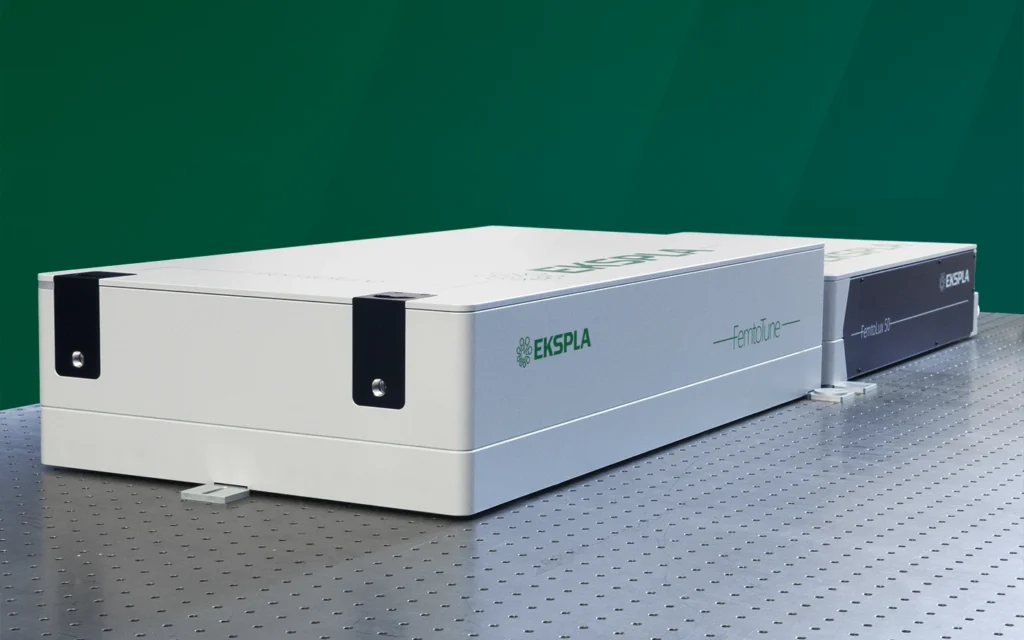
The new FemtoTune series femtosecond OPA raises a benchmark for ultrafast spectroscopy and imaging
Ultrafast experiments force a trade-off between pulse speed and wavelength reach. EKSPLA’s new FemtoTune delivers both, pairing sub-50 fs pulses at up to 100 kHz with broad tuning across the visible and near-infrared.
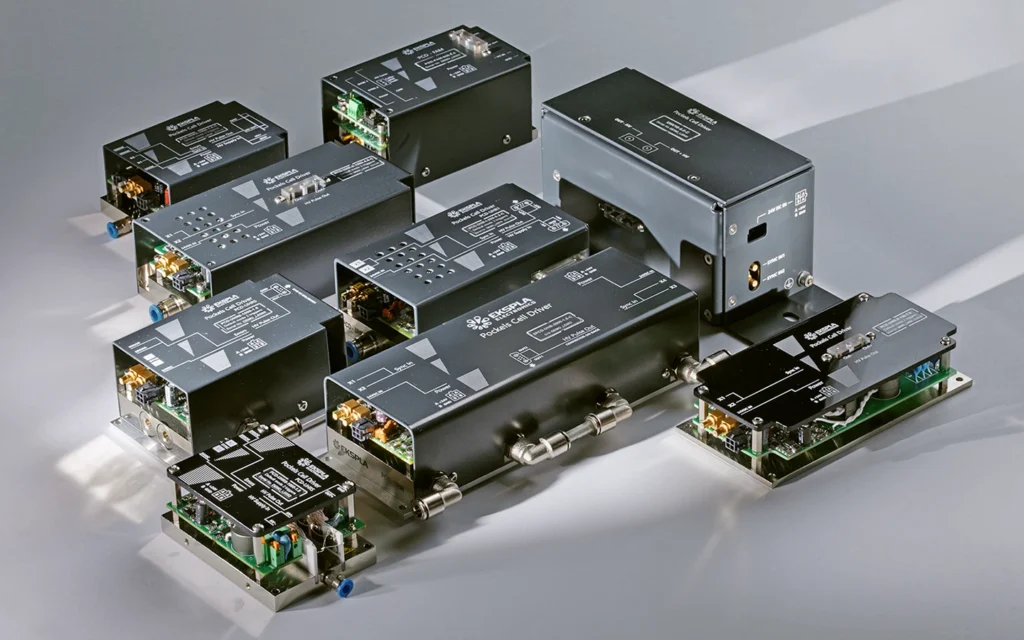
Pockels Cell PCD Drivers Line by EKSPLA: Compact, High-Speed, and High MTBF
High voltage, high speed, and a footprint about half that of typical competitors. EKSPLA Electronics’ new PCD Pockels cell drivers reach 9.8 kV at 6 MHz, and most units run error-free well past 10 years of 24/7 duty.