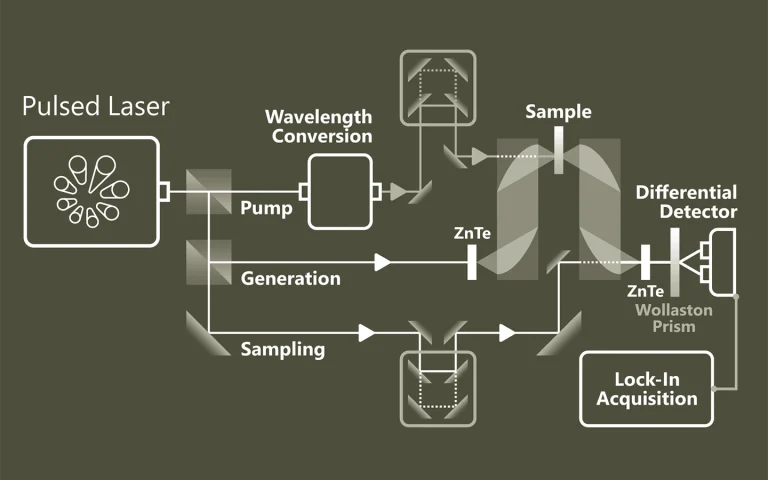
Pump-probe spectroscopy
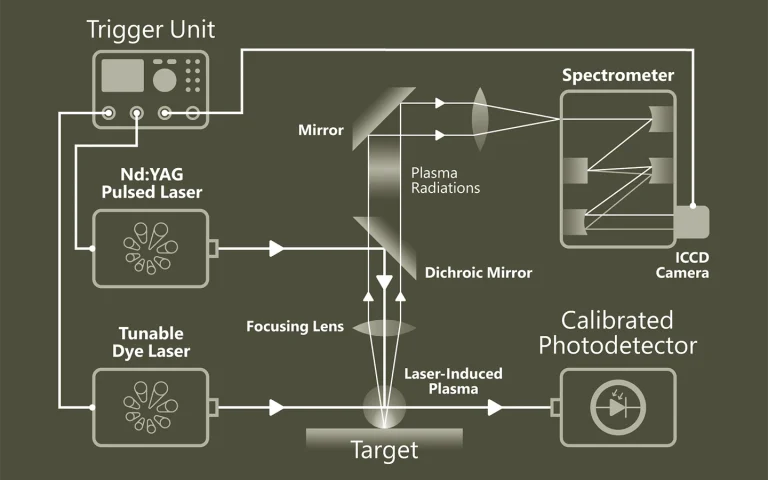
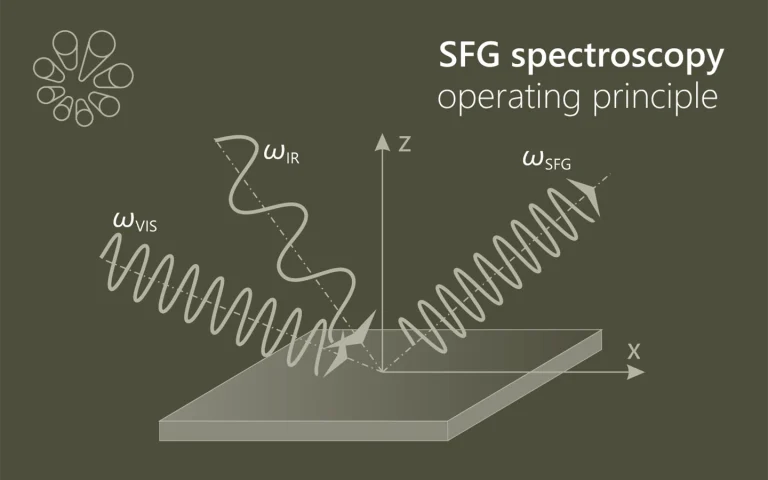
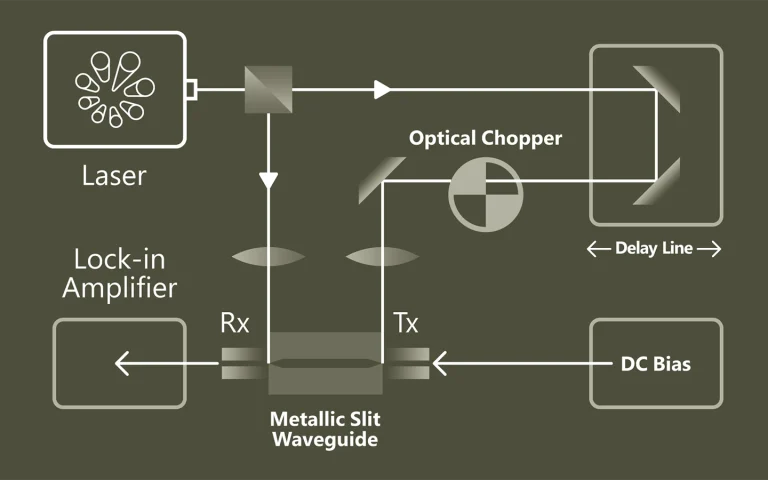
Ultrafast spectroscopy is based on light pulses shorter than the dynamics they resolve: a shorter pulse gives better time resolution, a longer pulse better spectral resolution. Two pulses separated by a variable time delay are used. The first pulse excites the sample (populating electronic or vibrational levels, ionizing it, driving Coulomb explosions, or creating a plasma), and the second, delayed pulse probes what has happened at that moment. The dynamics of the system are recorded by changing the delay between the pulses. Various experimental techniques record the time-resolved signals, for example transient absorption, four-wave mixing and sum frequency generation. The pump and probe spectral ranges can vary from X-ray and UV to the far infrared.
The advantage of pump-probe spectroscopy is direct investigation of dynamics: excitation relaxation, energy transfer, photochemical reaction dynamics, particle motion and structural changes. Tunable pump and probe pulses open the way to two-dimensional pump-probe spectroscopy, which yields a temporally resolved energy map of the system showing separated and coupled states.

Principle of pump-probe spectroscopy.