Terahertz spectroscopy
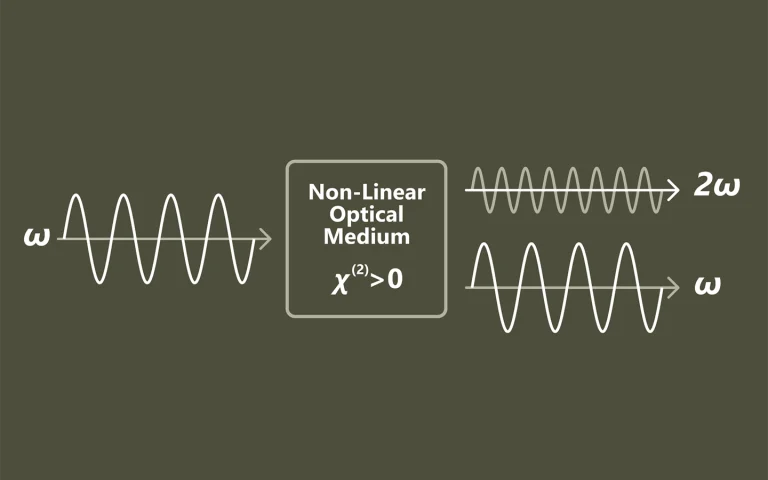
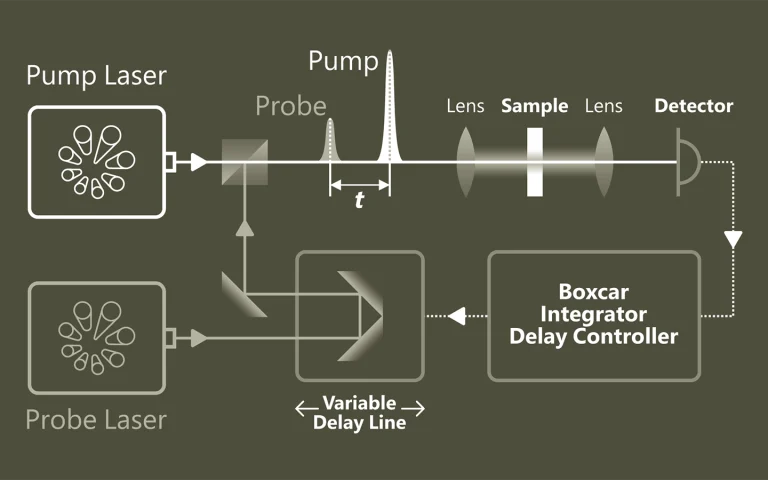
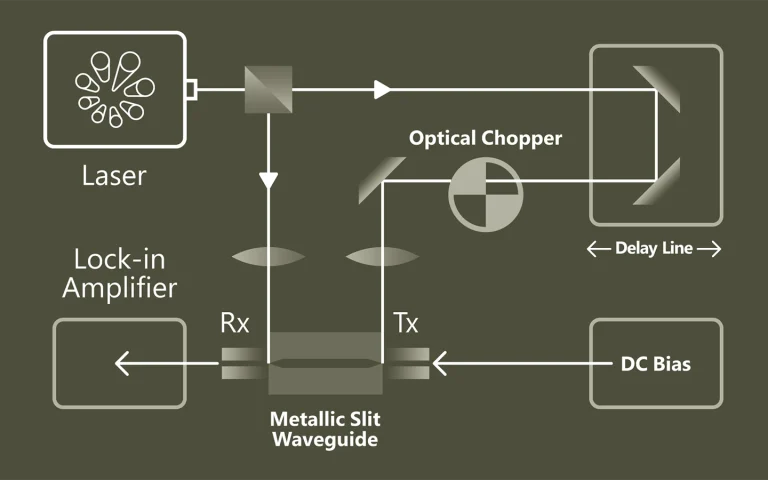
Terahertz time-domain spectroscopy (THz-TDS) probes inter-molecular interactions in solid materials across 0.1 – 10 THz, a low-energy, non-ionizing part of the electromagnetic spectrum. A femtosecond pulse generates a single-cycle terahertz transient in a nonlinear crystal, and after the transient has passed through the sample a delayed copy of the same pulse samples it electro-optically, one delay step at a time.
Because the measurement records the field rather than its intensity, amplitude and phase arrive together, and the refractive index and absorption coefficient of the sample follow directly. Many materials that are opaque in the visible are transparent at terahertz frequencies, and the radiation is non-ionizing, unlike X-rays, so biological tissue tolerates it. THz-TDS therefore supports contact-free conductivity measurements on metals, semiconductors, 2D materials and superconductors, and identifies amino acids, peptides, pharmaceuticals and explosives.
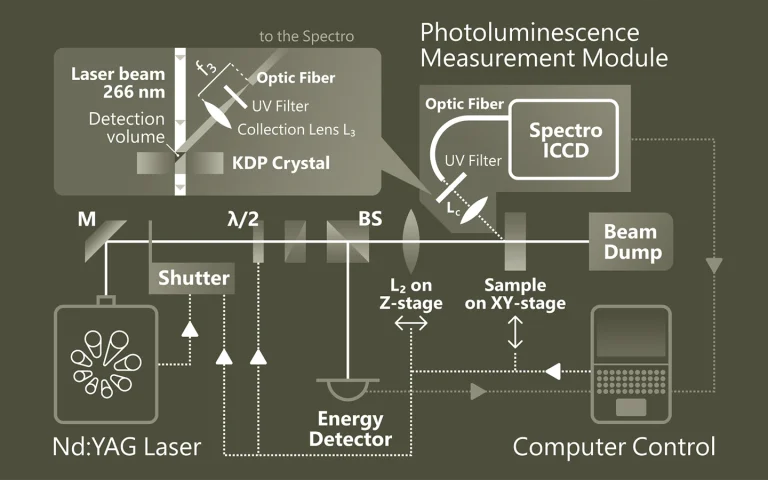
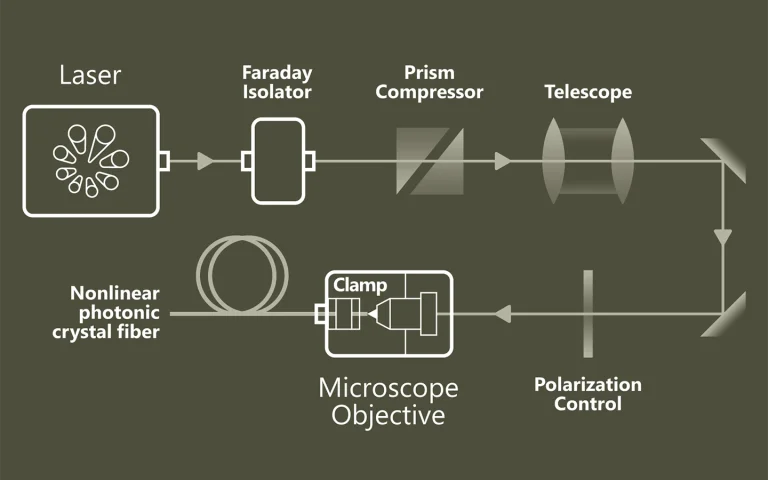
A THz-TDS bench is built around one femtosecond source, split into a generation arm, a sampling arm and, for photoexcitation studies, a pump arm. The LightWire FFS fiber seeder supplies that source: sub-200 fs pulses, up to 250 nJ, at kilohertz to megahertz rates. Both studies listed below used it. One built a compact, portable spectrometer reaching beyond 6 THz with a 50 dB dynamic range by broadening the pulses in a polarization-maintaining fiber and recompressing them; the other applied THz-TDS to colon and gastric tissue for cancer diagnosis.

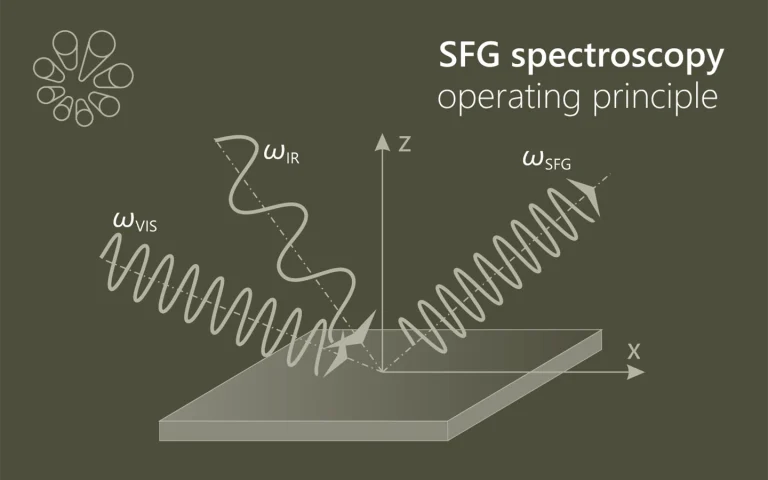
Principle of terahertz spectroscopy.