Photolysis
Photodissociation, photolysis, or photodecomposition is a chemical reaction in which a chemical compound is broken down by photons, defined as the interaction of one or more photons with one target molecule. In nature, photolysis is central to photosynthesis: light absorbed by chlorophyll drives the splitting of water into oxygen and hydrogen ions.
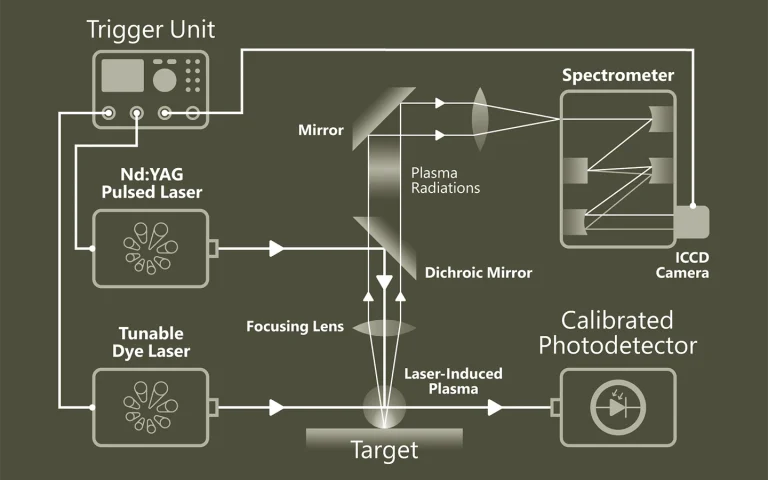
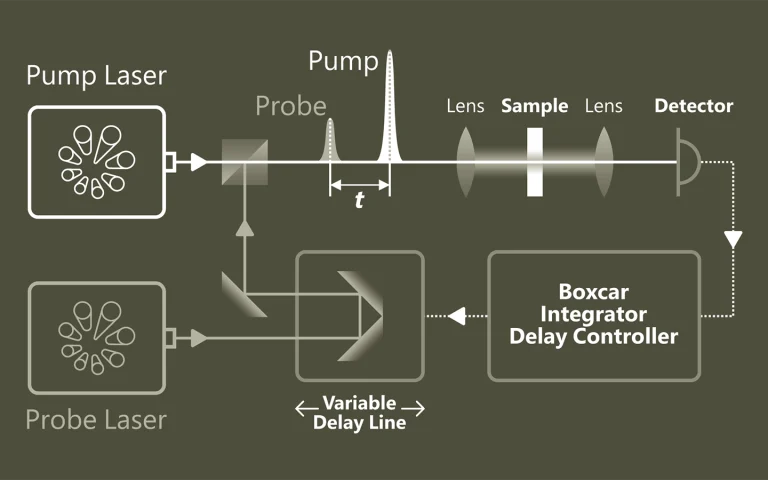
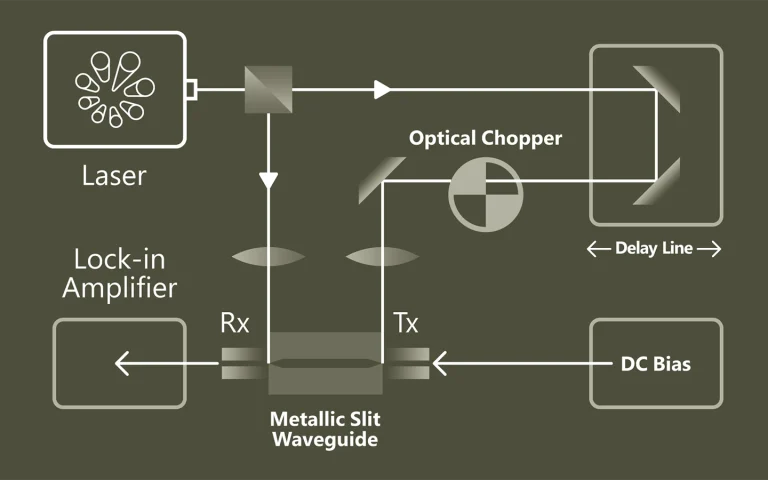
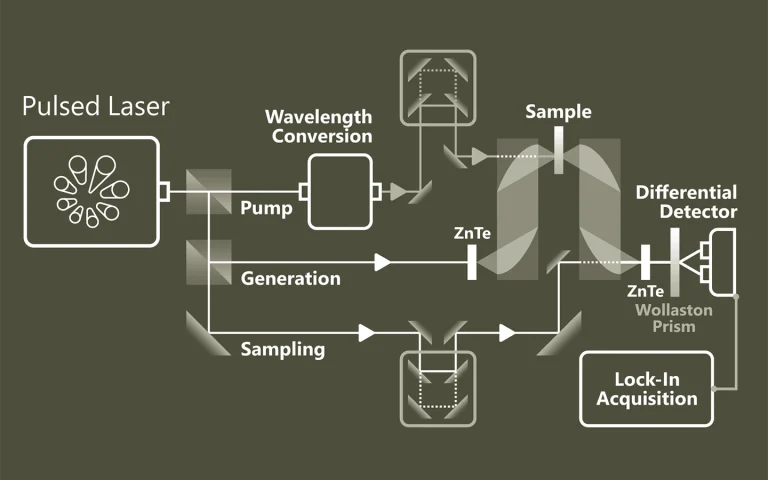
Laser flash photolysis is a technique for studying transient chemical and biological species generated by a short, intense light pulse from a nanosecond, picosecond or femtosecond laser (the pump pulse). The pulse creates short-lived photo-excited intermediates such as excited states, radicals and ions, in concentrations large enough for direct observation of their temporally changing absorption. The absorption of the sample is then recorded at short time intervals with a probe pulse to monitor relaxation or reaction processes initiated by the pump. Tunable-wavelength lasers based on optical parametric oscillators (OPO) allow the pump wavelength to be matched to the absorption band of the sample.

Principle of laser flash photolysis.