Laser-based Bessel beam scribing
Bessel beam scribing is the most efficient laser-based, kerf-free method for scribing glass. The technique introduces intra-volume voids, and the glass is then separated mechanically or thermally. Sidewalls come out smooth, and because only a single laser pass is required, scribing speeds are high.
A FemtoLux femtosecond laser in MHz burst mode, combined with a Bessel beam, scribes soda-lime glass 1 – 4.8 mm thick with minimal surface chipping. At 4.8 mm the scribing speed reaches 80 mm/s and sidewall roughness stays below 0.5 µm. Sapphire was scribed at 300 mm/s, also with a smooth sidewall.
The polarization state controls how the microcracks are oriented. In 1 mm soda-lime glass, turning the linear polarization parallel to the scribing direction aligns them with the cut and reduces the separation stress from about 60 to 15 MPa. At a 7 µm pitch the stress falls to 7.3 MPa, which corresponds to a scribing speed of 140 mm/s at 3.6 W of average power, with sidewall roughness still below 1 µm.

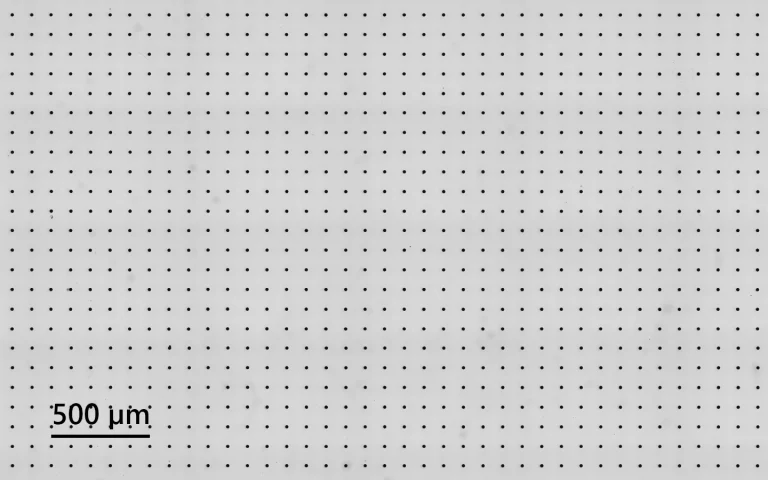
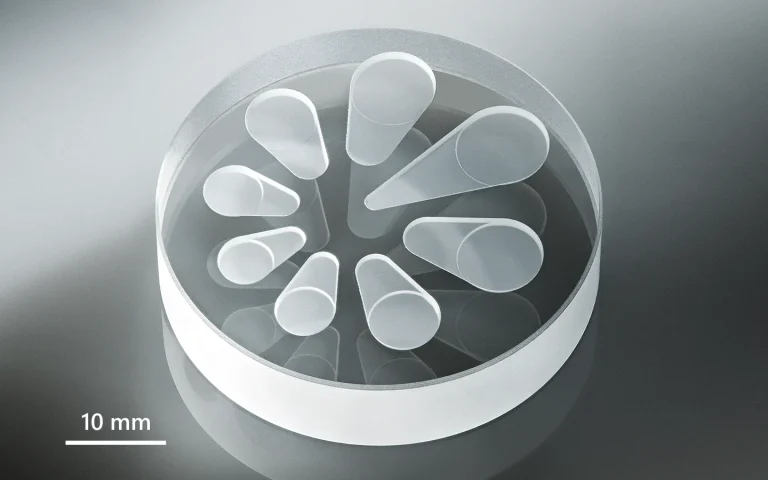
Laser-based Bessel beam scribing of 4.8 mm soda-lime glass.
Courtesy of FTMC.

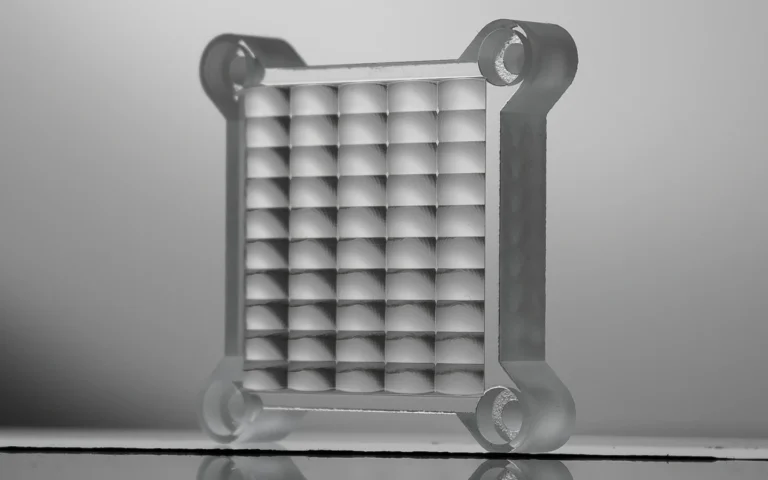
Scribed 4.8 mm soda-lime edge view.
Courtesy of FTMC.

Scribed 1 mm soda-lime sidewall view.
Courtesy of FTMC.

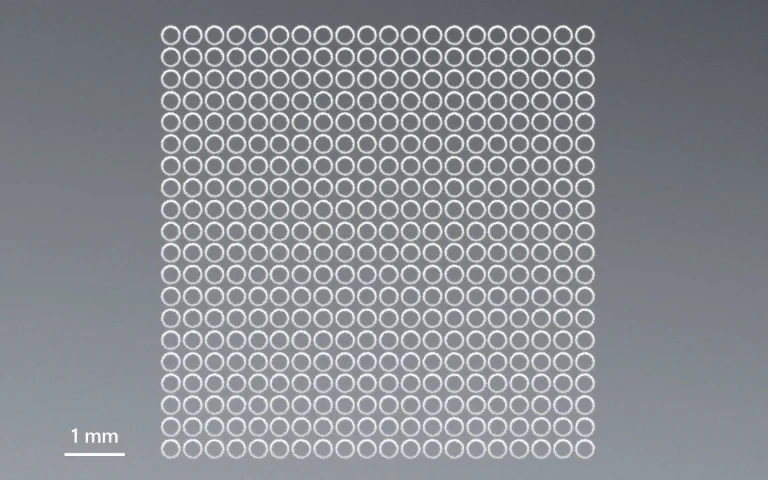
Sapphire sidewall after stealth dicing.
Courtesy of FTMC.