Through-glass vias (TGVs) fabrication
Forming high-aspect-ratio holes in glass substrates is becoming more important, especially in the semiconductor field. Femtosecond lasers can form low-taper, high-aspect-ratio TGVs in glass at high quality, with low chipping, no cracking, and a smooth inner hole wall.
FemtoLux 30 operating in GHz burst mode produces high-aspect-ratio TGVs in glass substrates by percussion drilling. Splitting the single high-energy pulse into 50 pulses in a GHz burst achieves aspect ratios above 1:80 and controls the hole’s depth to a resolution of 0.1 µm by tuning the burst configuration. The technology was validated for AN100, BK7, BF33, D263, EXG, fused silica and soda-lime glass.
Combining a long GHz burst with beam shaping narrows the vias further: a single 180 µJ burst forms 1 µm diameter TGVs through 0.5 mm glass, an aspect ratio of 1:500, in one laser shot. Because each via needs only one burst, thousands can be formed per second.
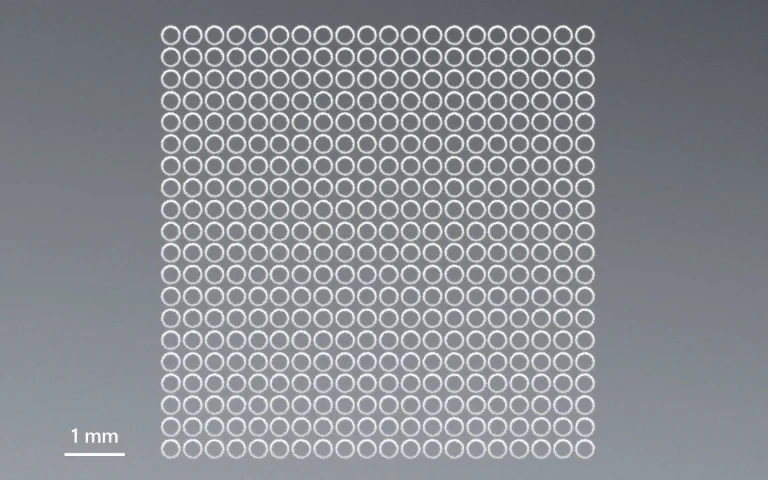
TGVs can also be formed by combining MHz+GHz burst mode with bottom-up milling. Bottom-up milling gives zero-taper structures and the MHz+GHz burst raises throughput; together they produced a matrix of 200 µm diameter holes in BF33 and D263 glass.

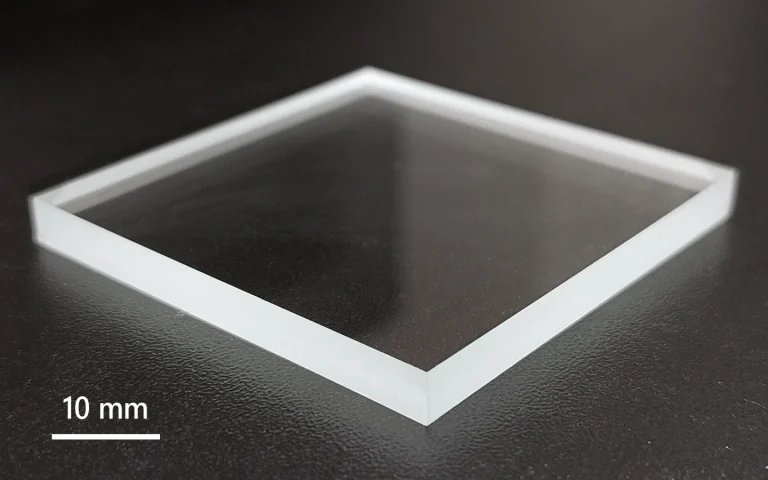
GHz burst assisted percussion drilling of high aspect ratio holes in EXG glass.
Courtesy of Akoneer.
Manufacturing examples

GHz burst assisted percussion drilling of high aspect ratio holes in EXG glass.
Courtesy of Akoneer.
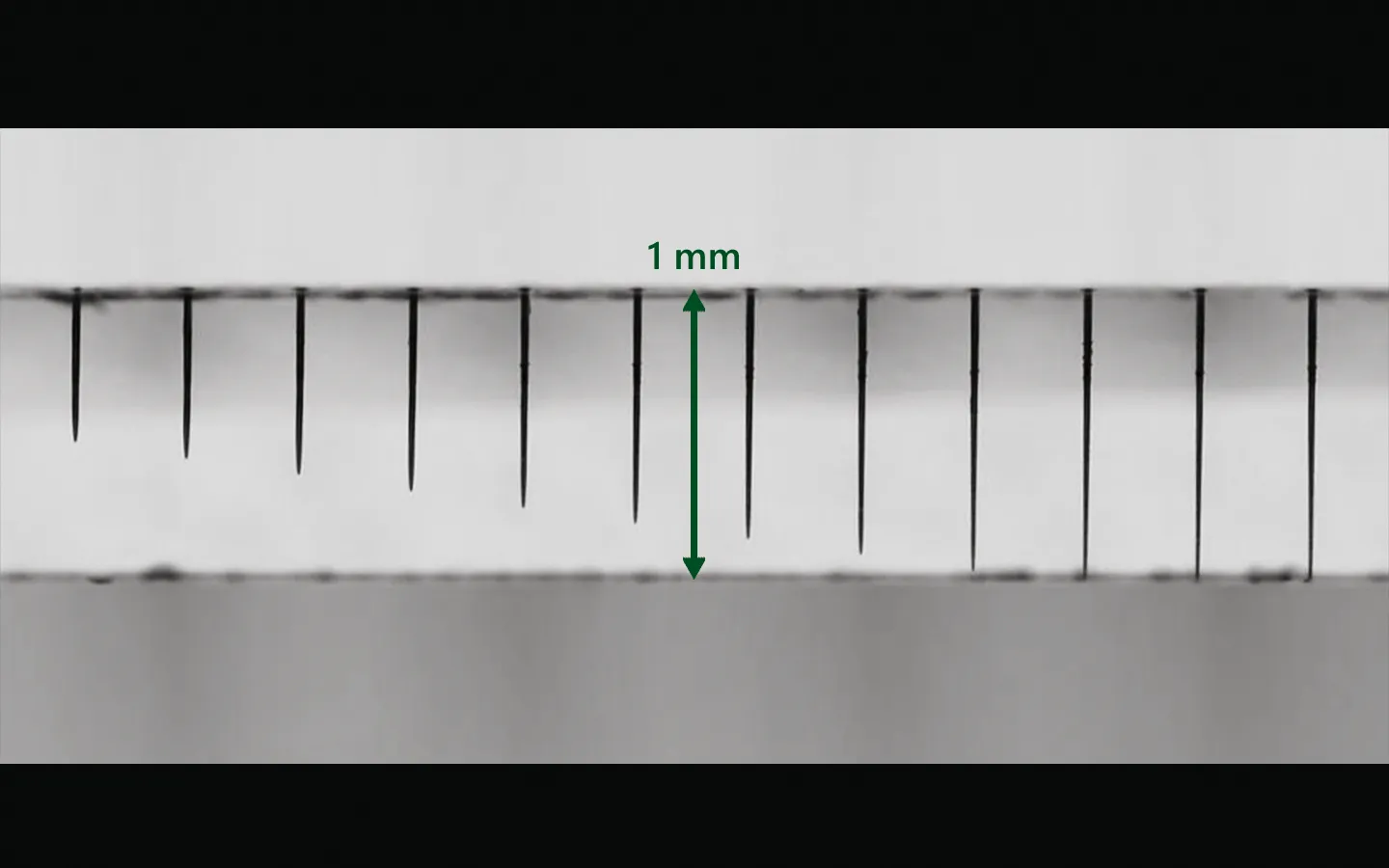
GHz burst assisted percussion drilling of high aspect ratio holes in EXG glass.
Courtesy of Akoneer.
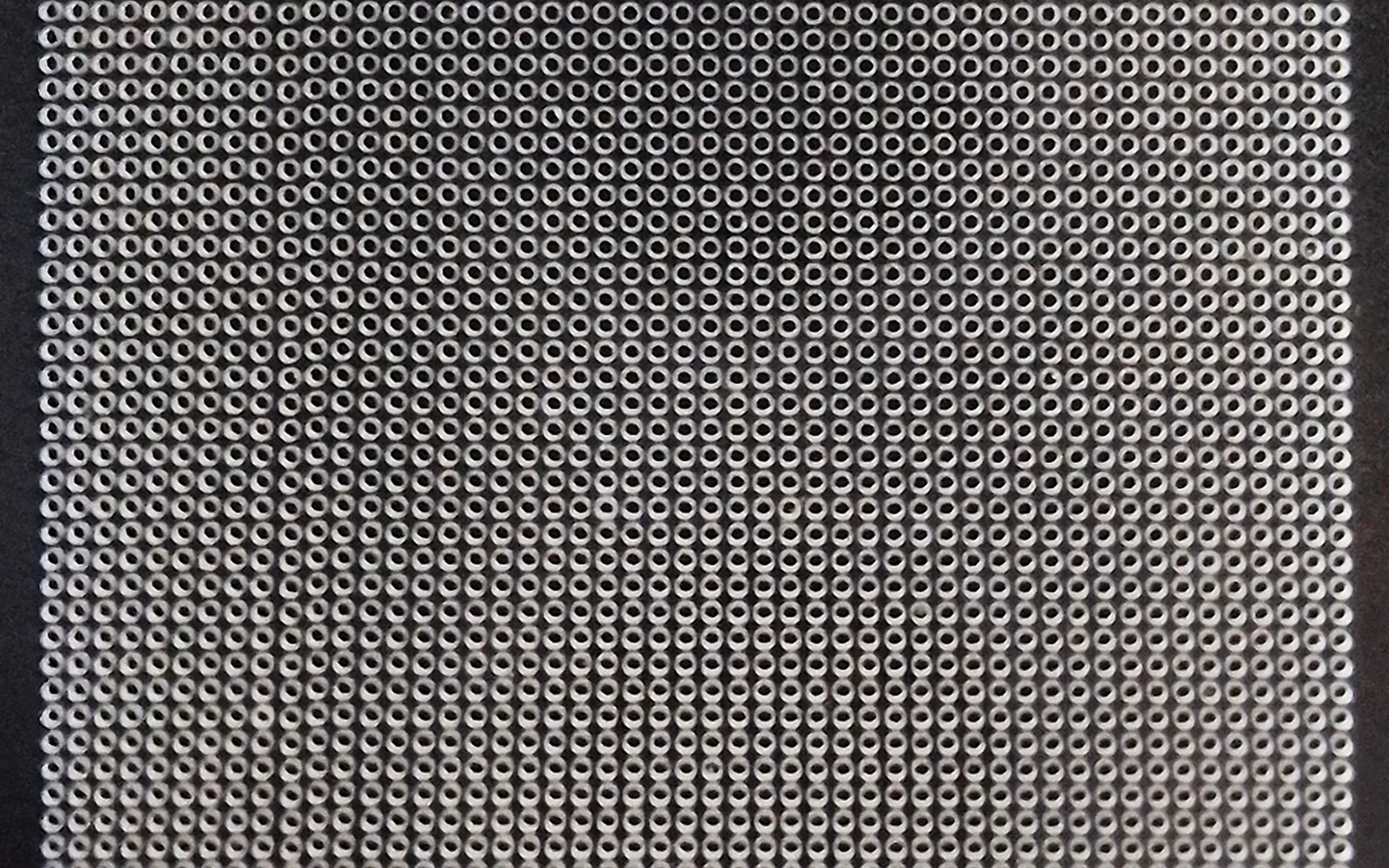
Bottom-up milling of 200 µm holes in SCHOTT BF33/D263 glass.
Courtesy of FTMC.
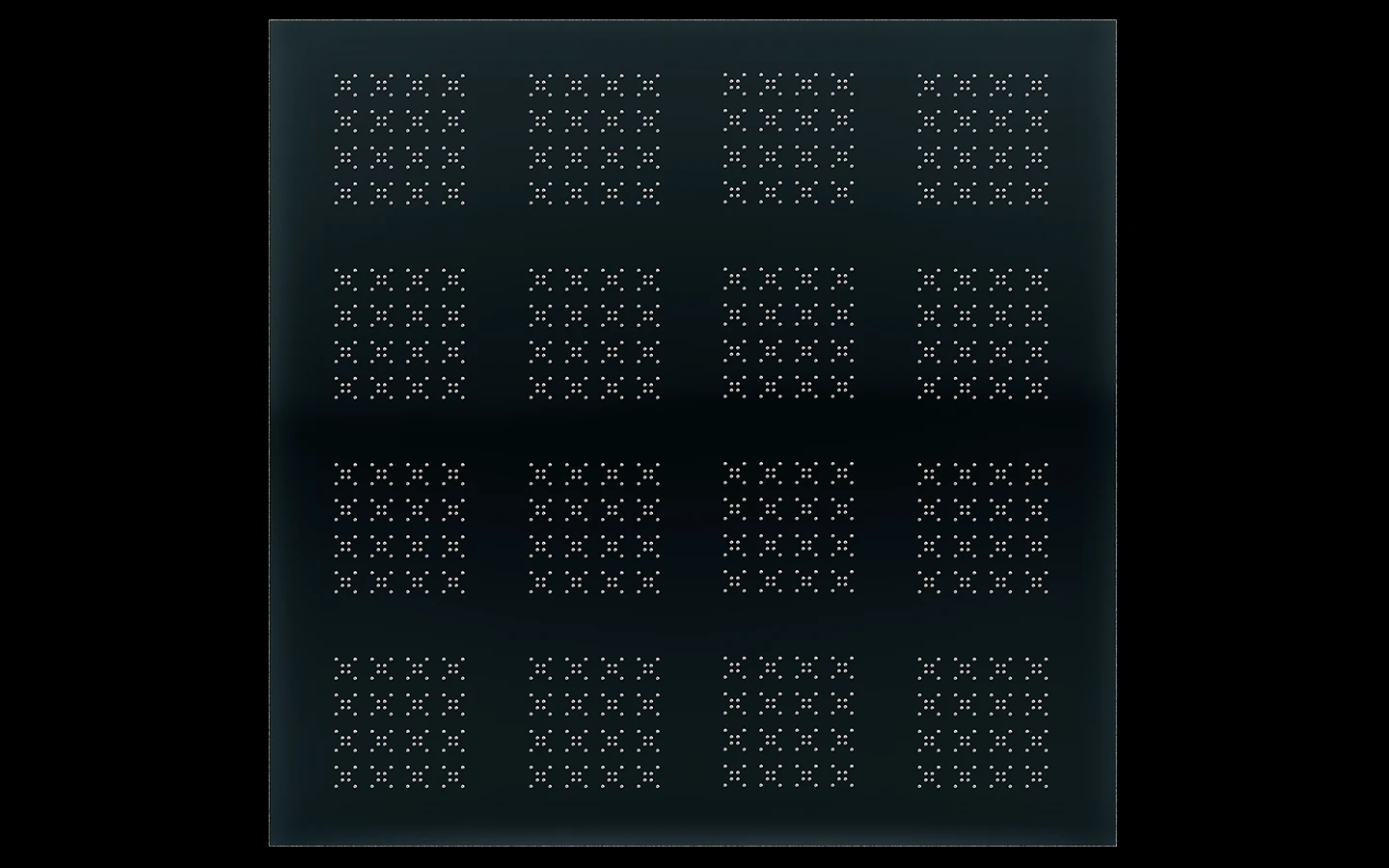
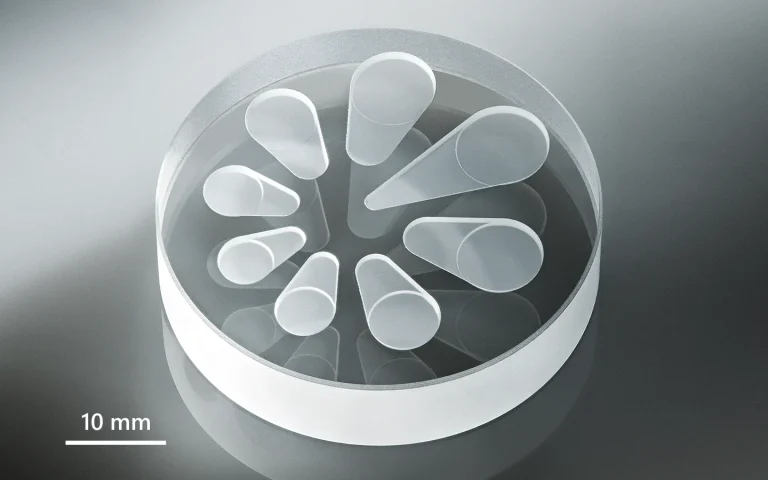
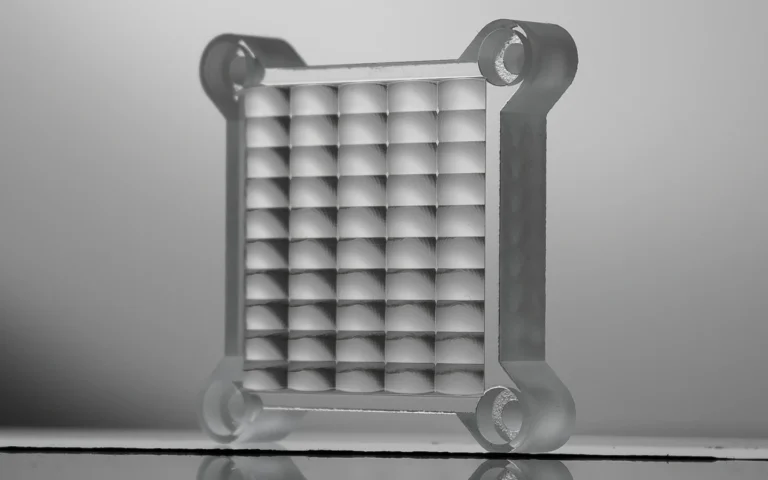
Selective laser etching (SLE) of through-glass vias in glass.
Courtesy of WoP.
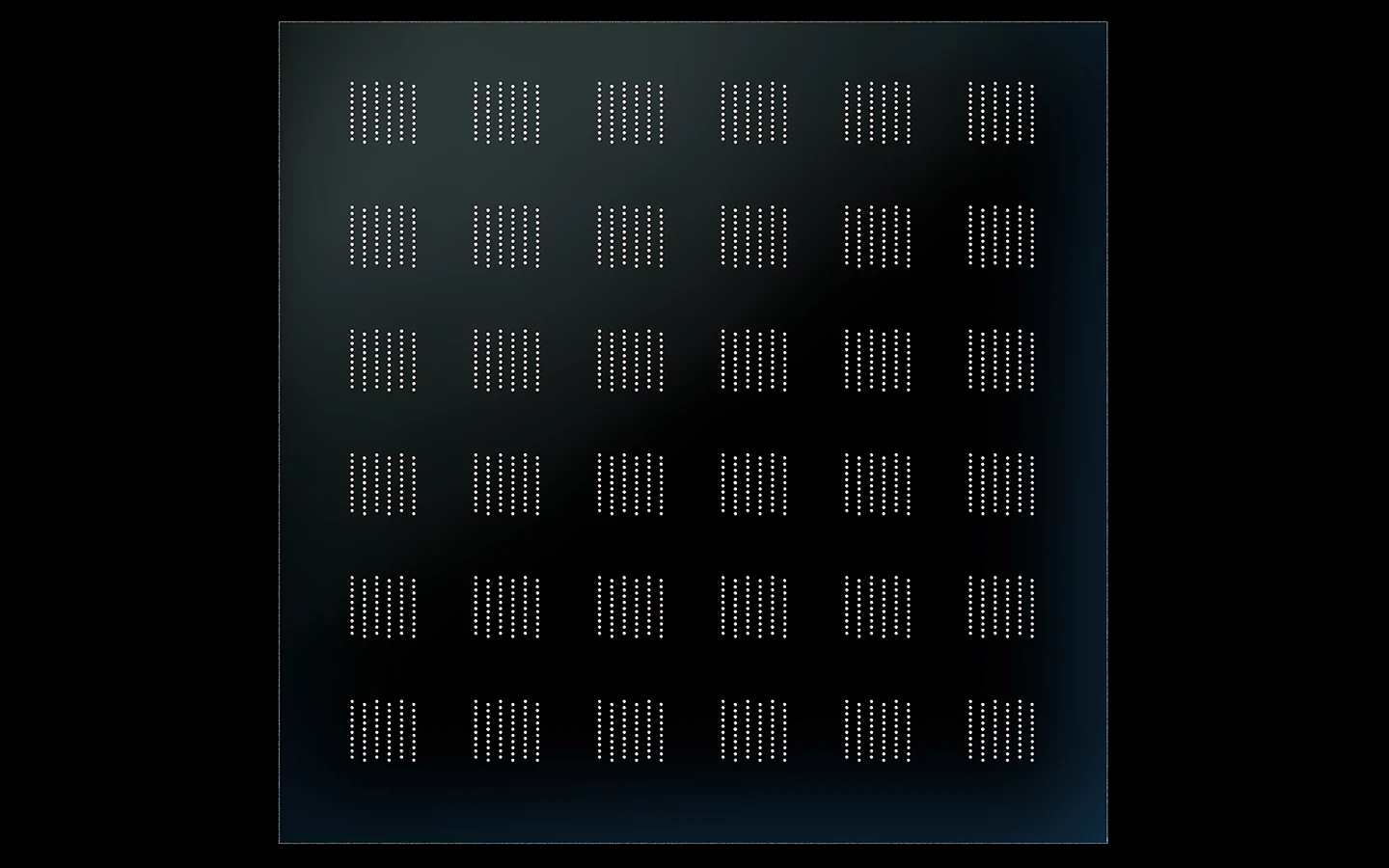
Selective laser etching (SLE) of through-glass vias in glass.
Courtesy of WoP.
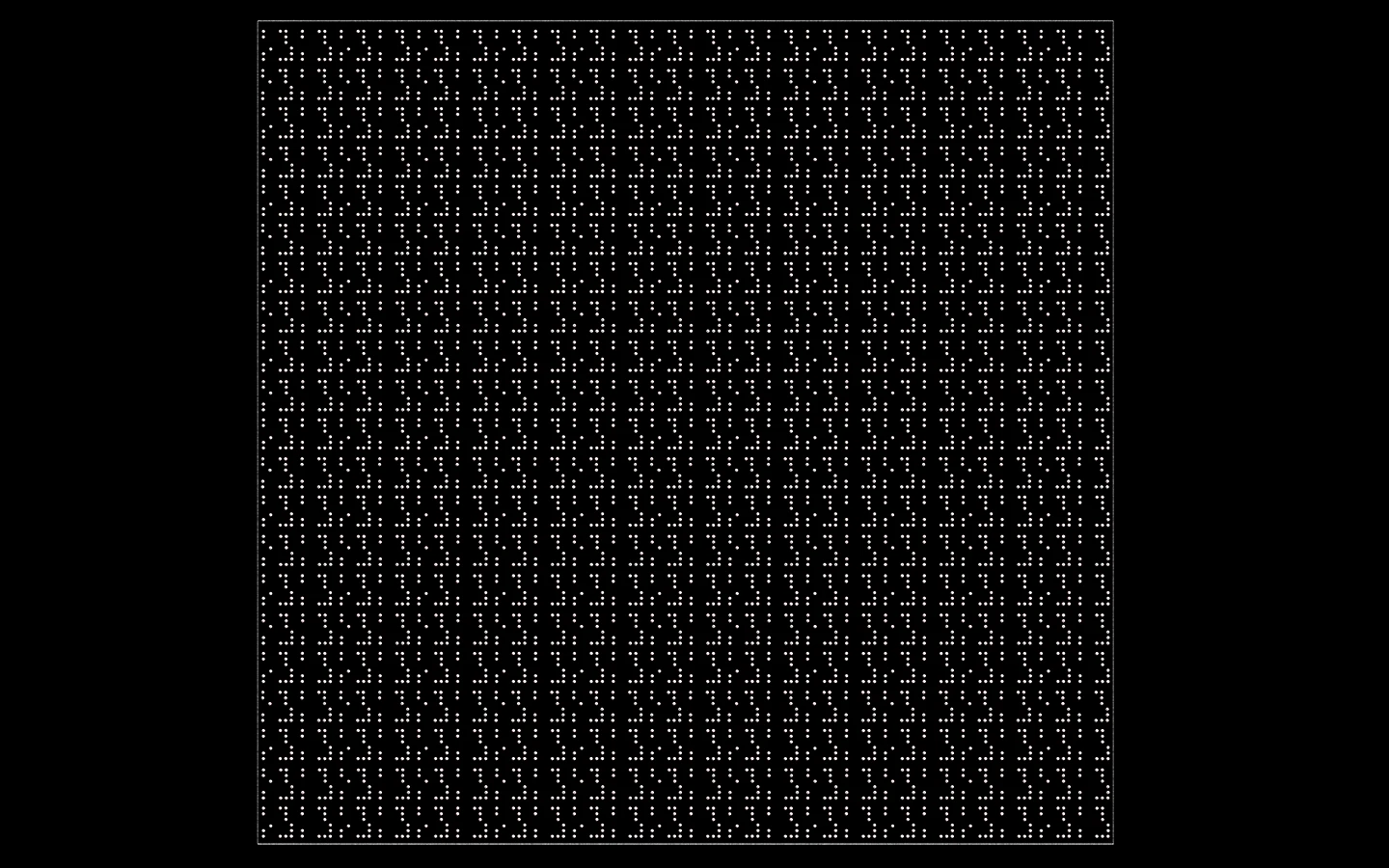
Selective laser etching (SLE) of through-glass vias in glass.
Courtesy of WoP.