Femtosecond laser-induced selective etching
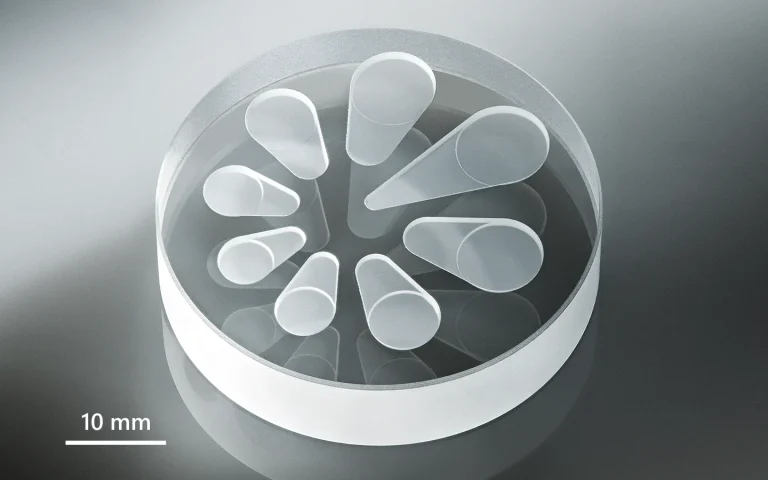
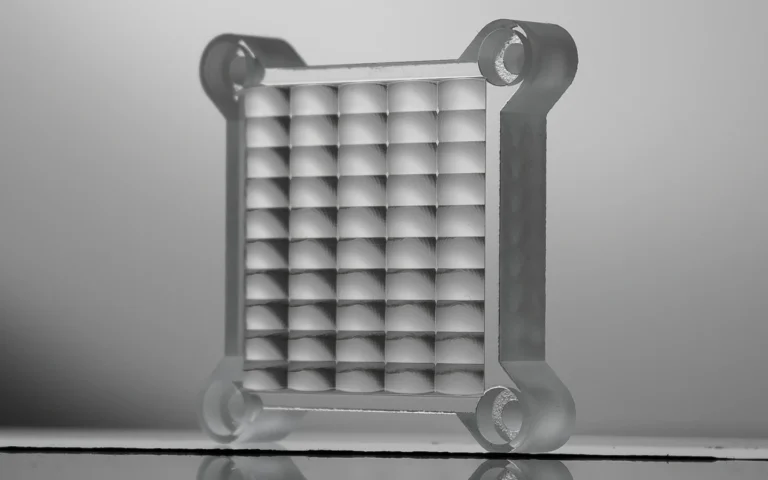
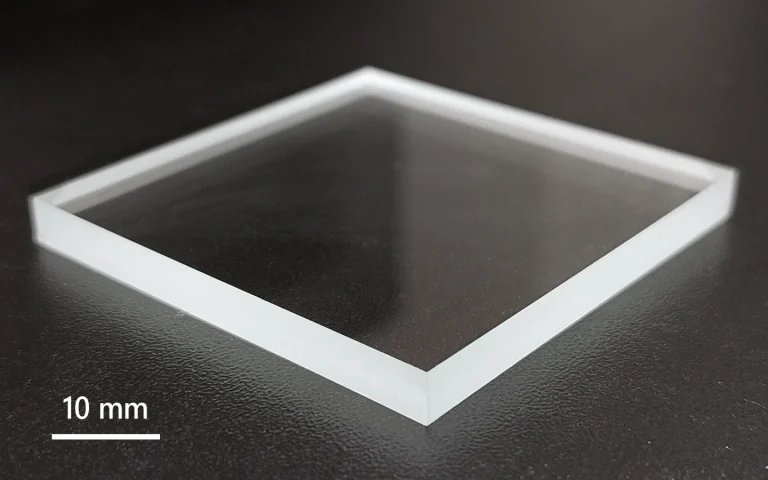
Focused femtosecond pulses modify the structure of a transparent material without removing it. A chemical etch then attacks the modified regions much faster than the surrounding bulk, which is what makes the removal selective. The result is taper-free 3D microfabrication, with surface roughness in the hundreds of nanometers.
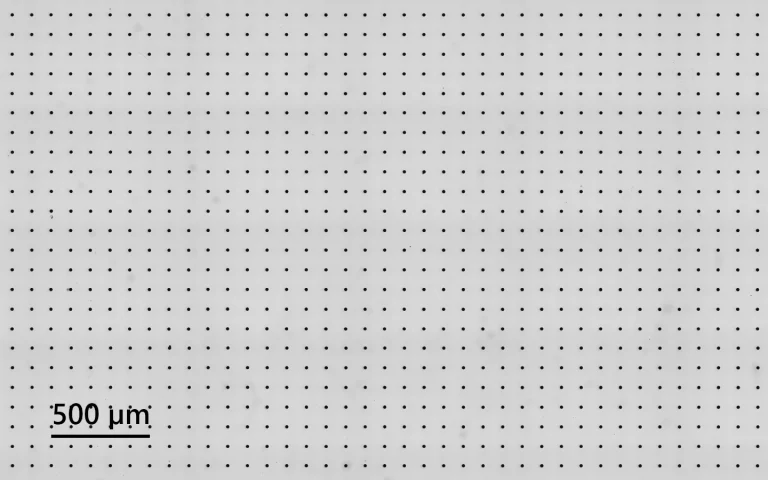
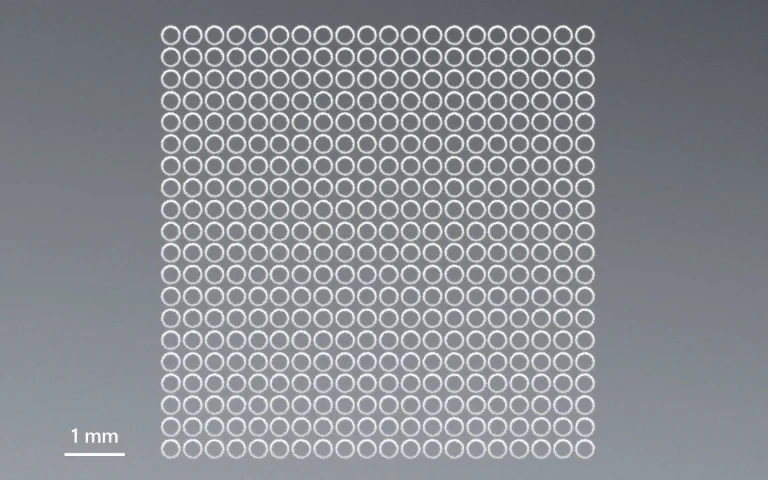
A FemtoLux supplies the pulses for both examples here. A movable bistable switch was made in fused silica with 20 µm arm widths, and through-glass vias of various diameters were etched taper-free in the same material. One comes from micromechanics, the other from semiconductor fabrication.
Manufacturing examples

Femtosecond laser-induced selective etching of various-diameter holes in fused silica.
Courtesy of WOP.

Femtosecond laser-induced selective etching of a bistable switch.
Courtesy of Femtika.