Hybrid laser processing of micro-lens arrays
Femtosecond lasers process glass with high precision, but throughput has long been the limiting factor for industrial use. Burst mode addresses that limit, and has opened applications single-pulse operation could not reach.
In burst mode, a single high-energy pulse is divided into multiple lower-energy pulses, which uses the available laser power more efficiently. This prevents excessive energy deposition, which would otherwise degrade processing quality. The high intra-burst repetition rate, from MHz to GHz, means every pulse contributes to material removal.
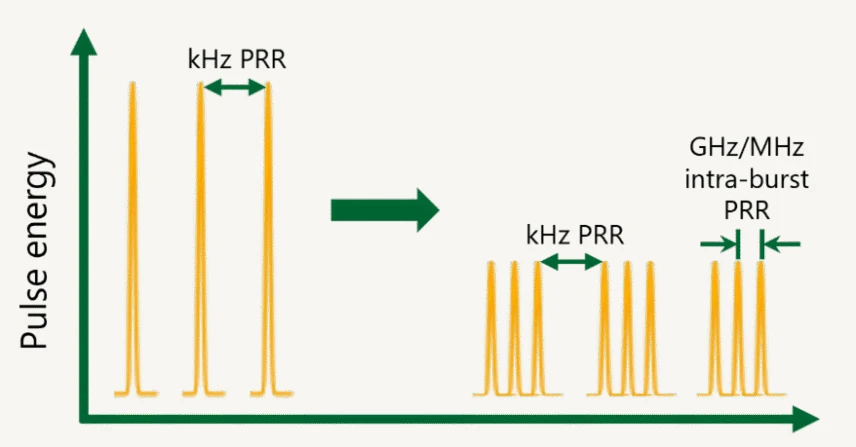
Illustration of burst mode operation.
Bottom-up milling focuses the beam at the bottom of the sample, so ablation debris leaves through the backside and high aspect ratio geometries can be formed in glass.
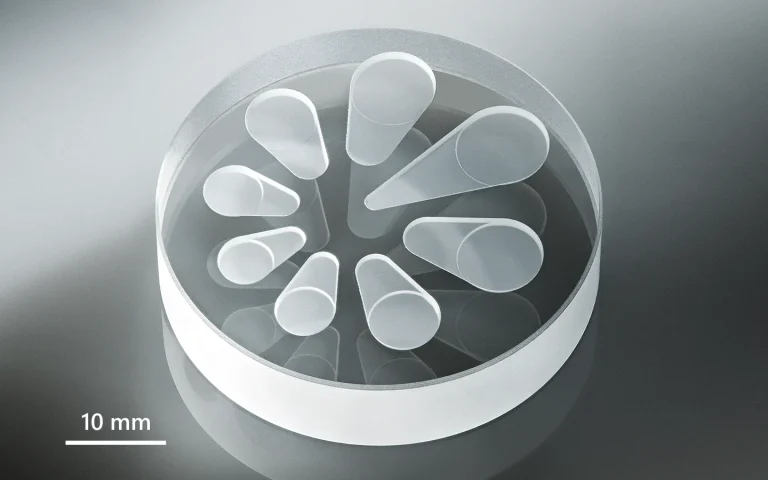
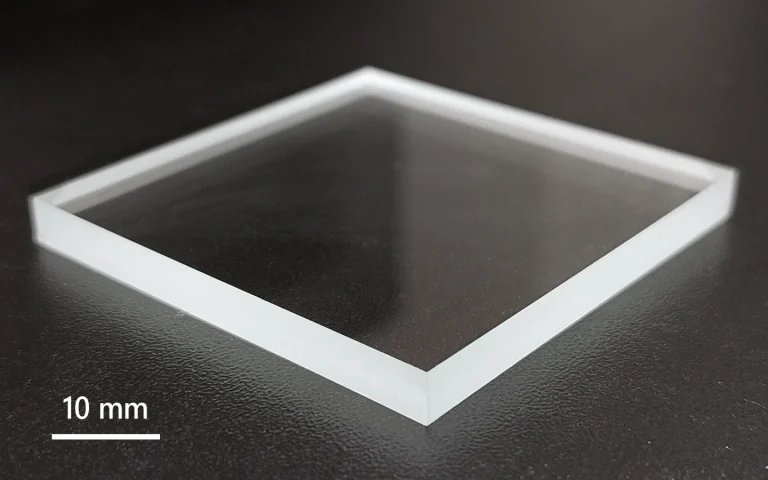
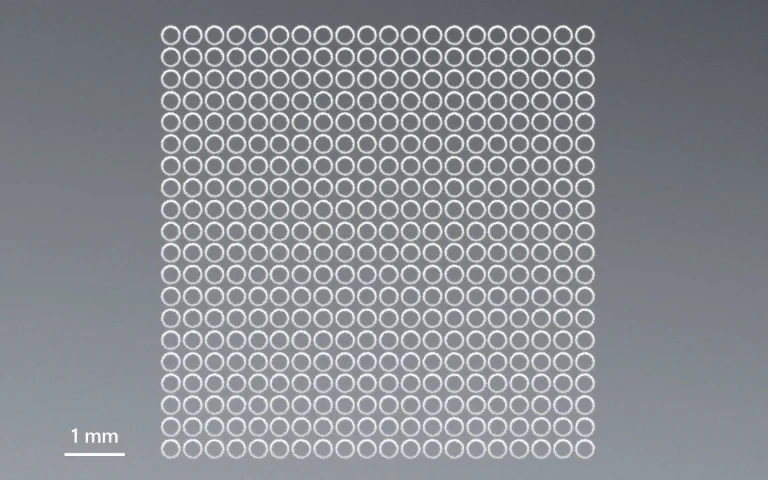
A micro-lens array was fabricated with hybrid laser processing: burst mode combined with bottom-up milling. The device base was first cut from a thick fused-silica plate, the lens array was then ablated on its surface, and CO₂ laser polishing brought it to optical quality. The same three-step route applies to other custom micro-optical elements.
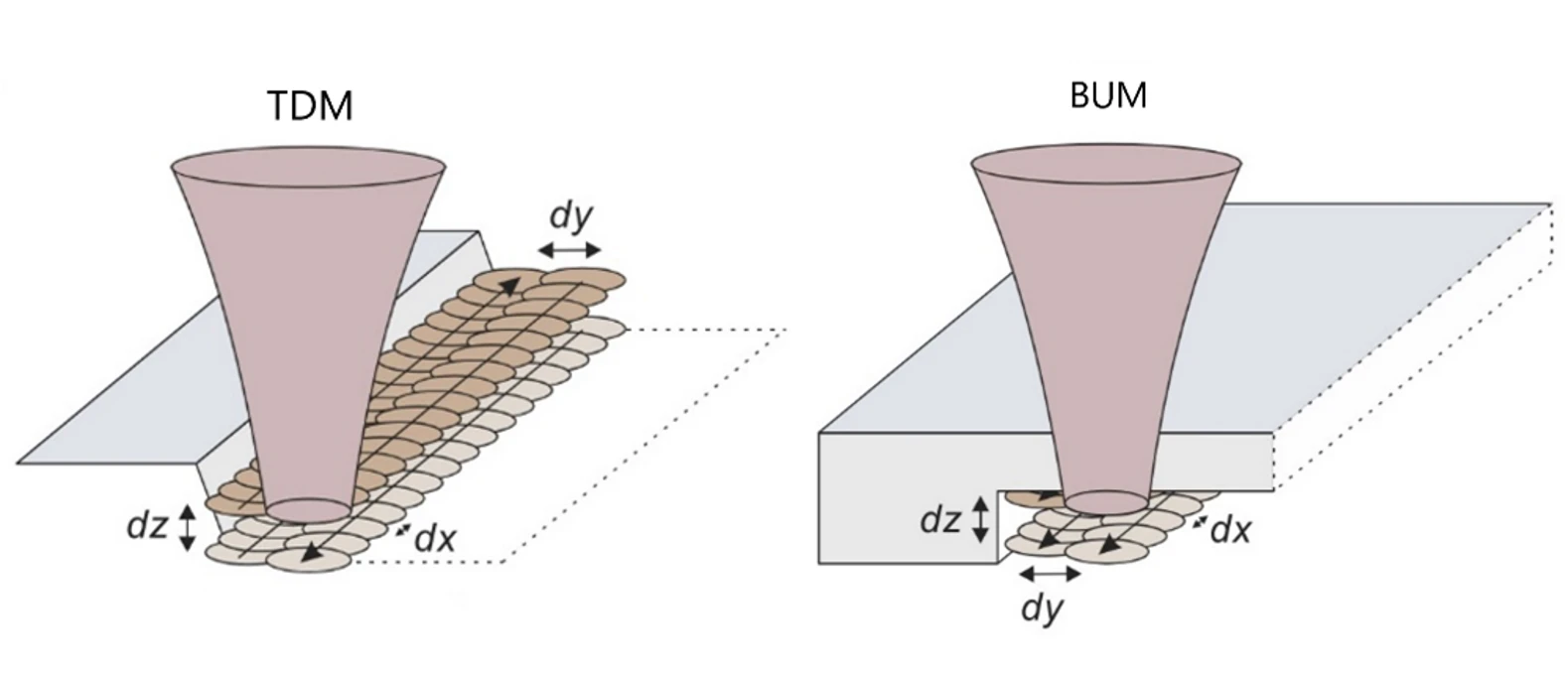
Illustration of TDM and BUM.
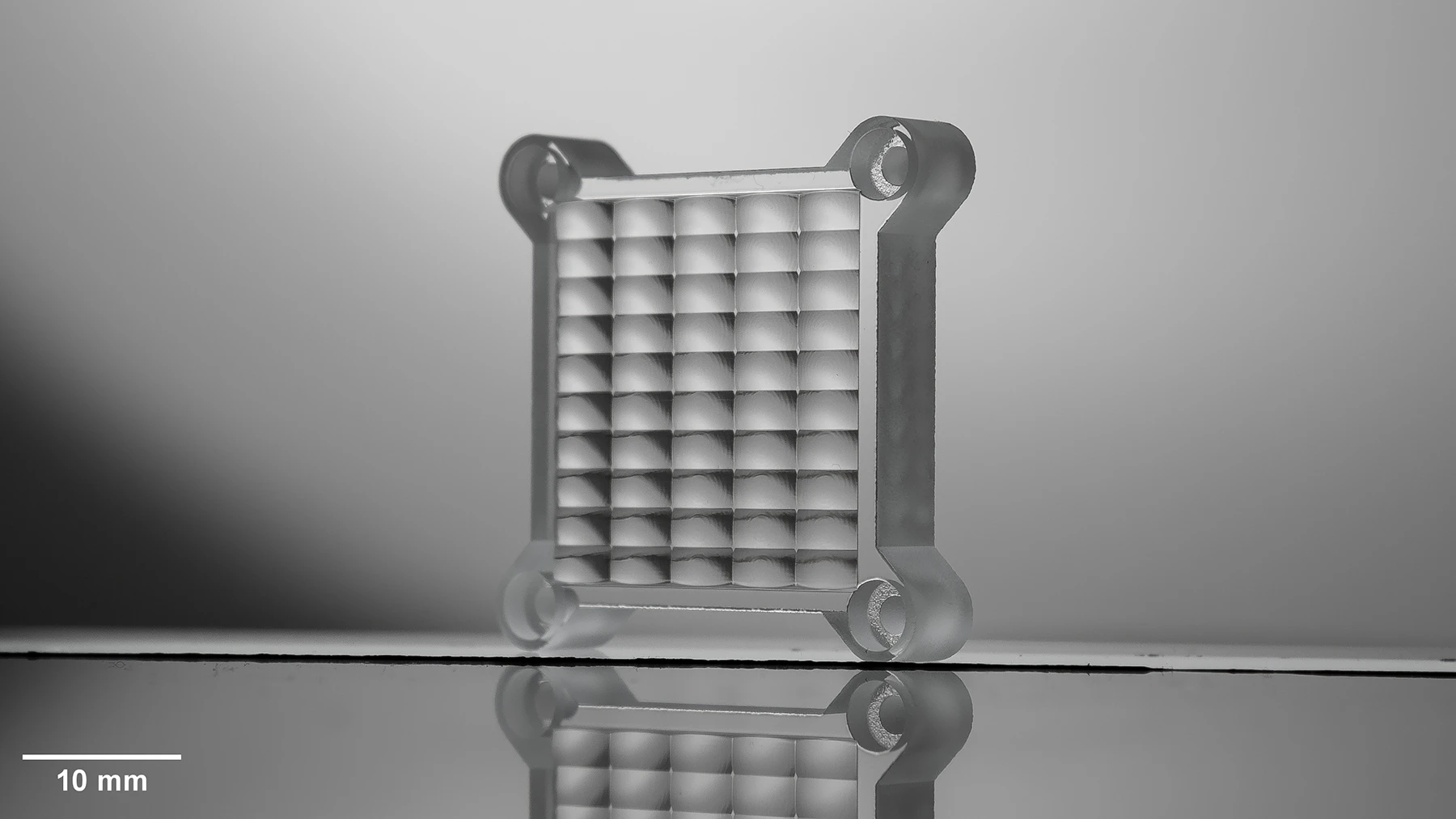
Micro-lens array fabricated with hybrid laser processing method using the FemtoLux 30.
Courtesy of FTMC.