Bottom-up milling of glass
Conventional laser milling struggles to achieve high aspect ratio geometries: ablation debris accumulates within the ablation area, prevents further material removal and saturates the ablated depth. In bottom-up milling the laser beam is focused at the bottom of the sample instead, so all ablation products leave through the backside and high aspect ratio geometries can be formed in glass.
The FemtoLux GHz burst function combined with bottom-up milling raises process throughput. Precise, flexible control of the burst energy and the number of pulses in the burst sets the thermal stress generated in the glass substrate. With the right parameters the removal process switches to laser-induced fracture, and the glass leaves in particle form.
With 25 pulses in a GHz burst, the material removal rate reaches 600 mm³/min. Bottom-up milling is also taper-free, and forms holes and channels with depths of tens of millimeters.

Schematic of top-down milling (TDM) and bottom-up milling (BUM) techniques.
Manufacturing examples
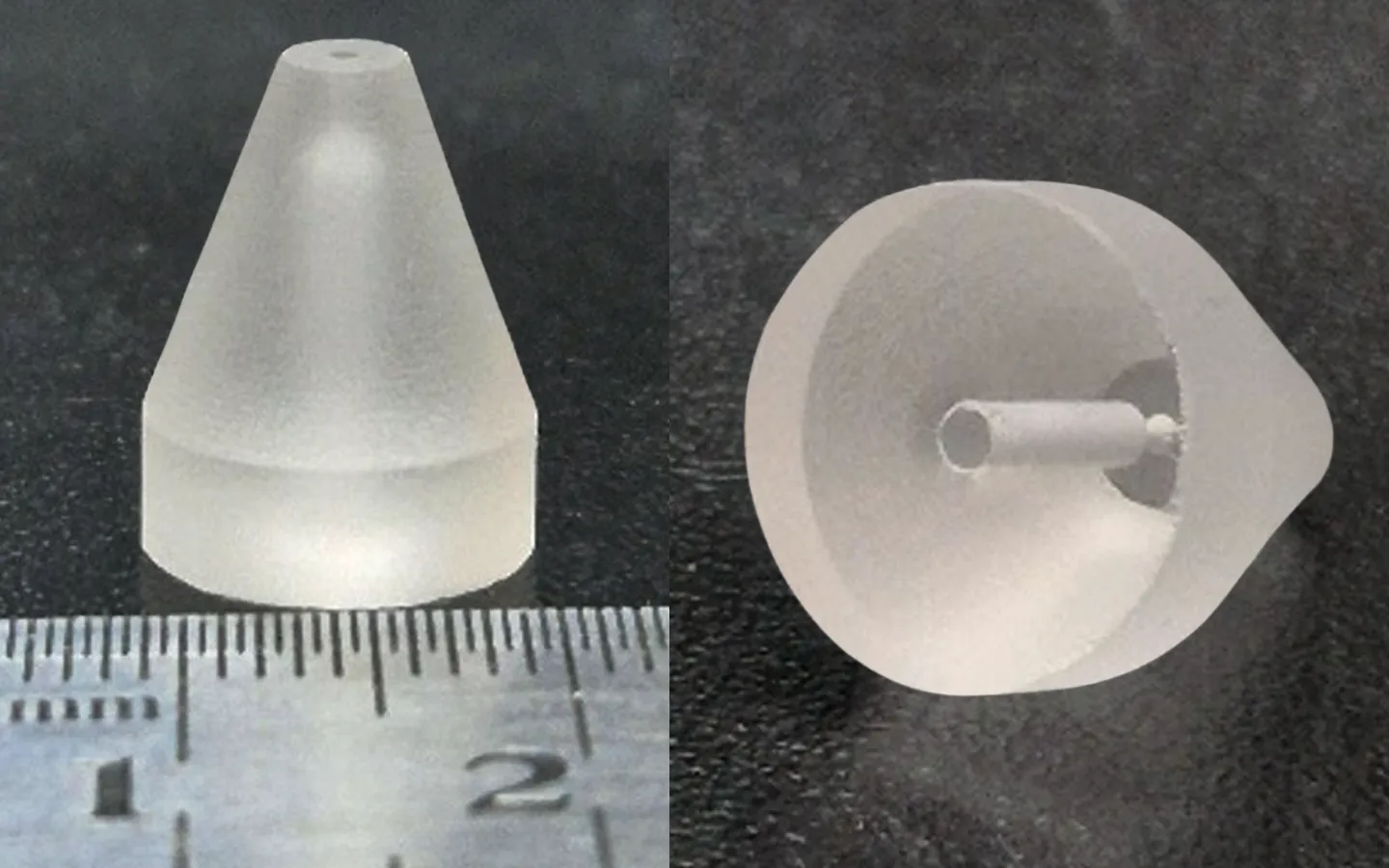
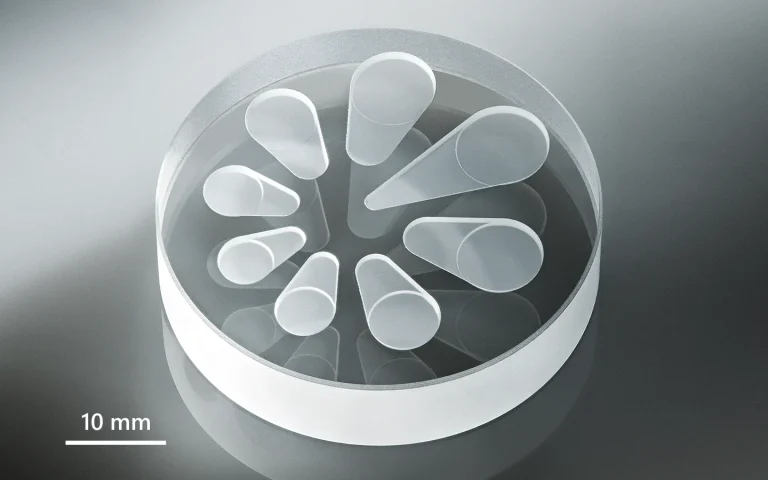
Glass nozzle fabrication by using multi-step bottom-up milling.
Courtesy of FTMC.
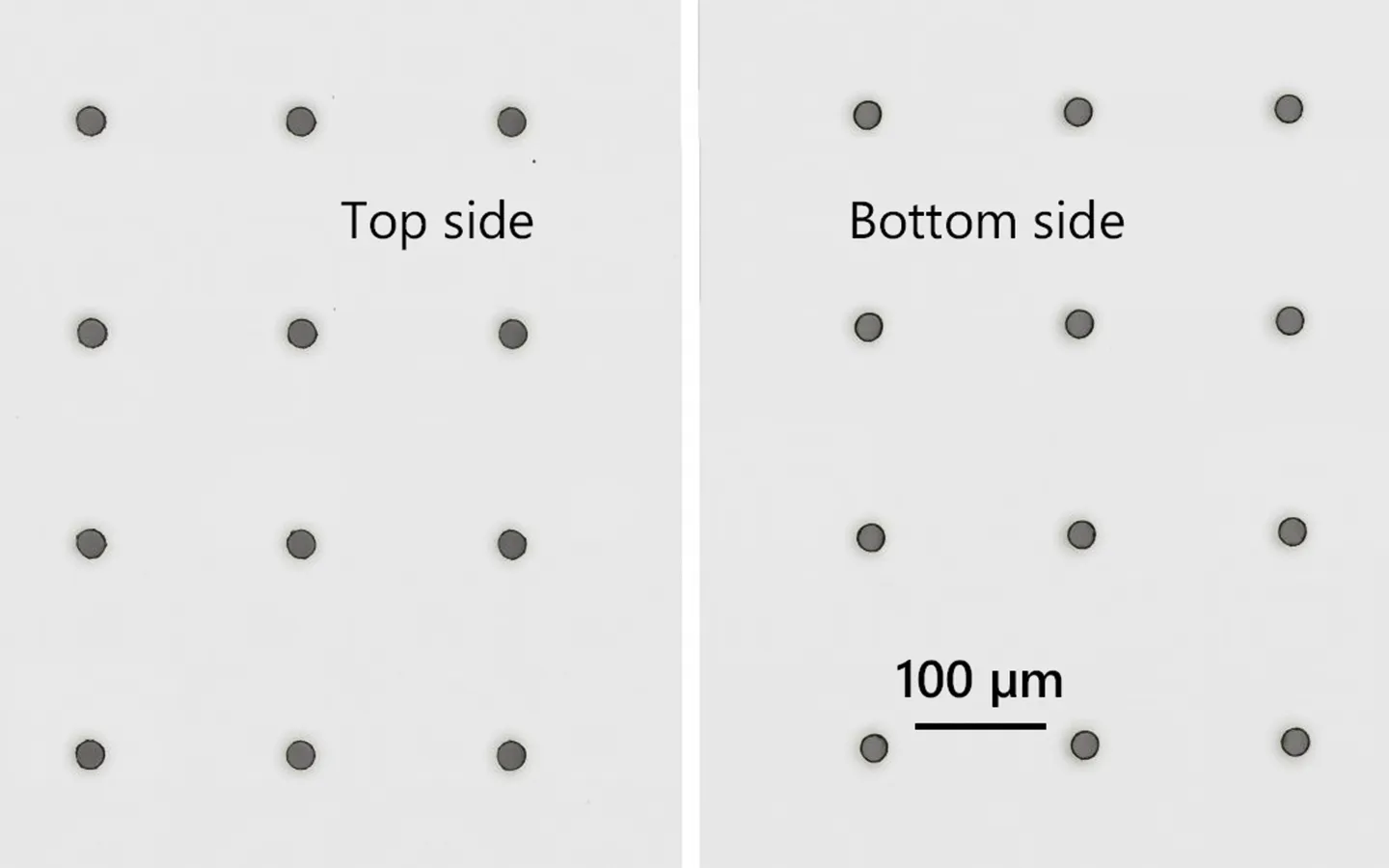
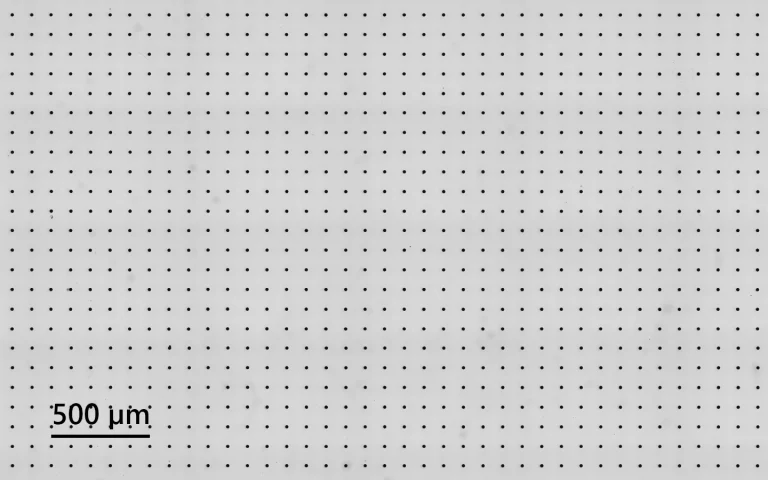
Bottom-up milling of 100 µm diameter taper-free channels in glass.
Courtesy of FTMC.
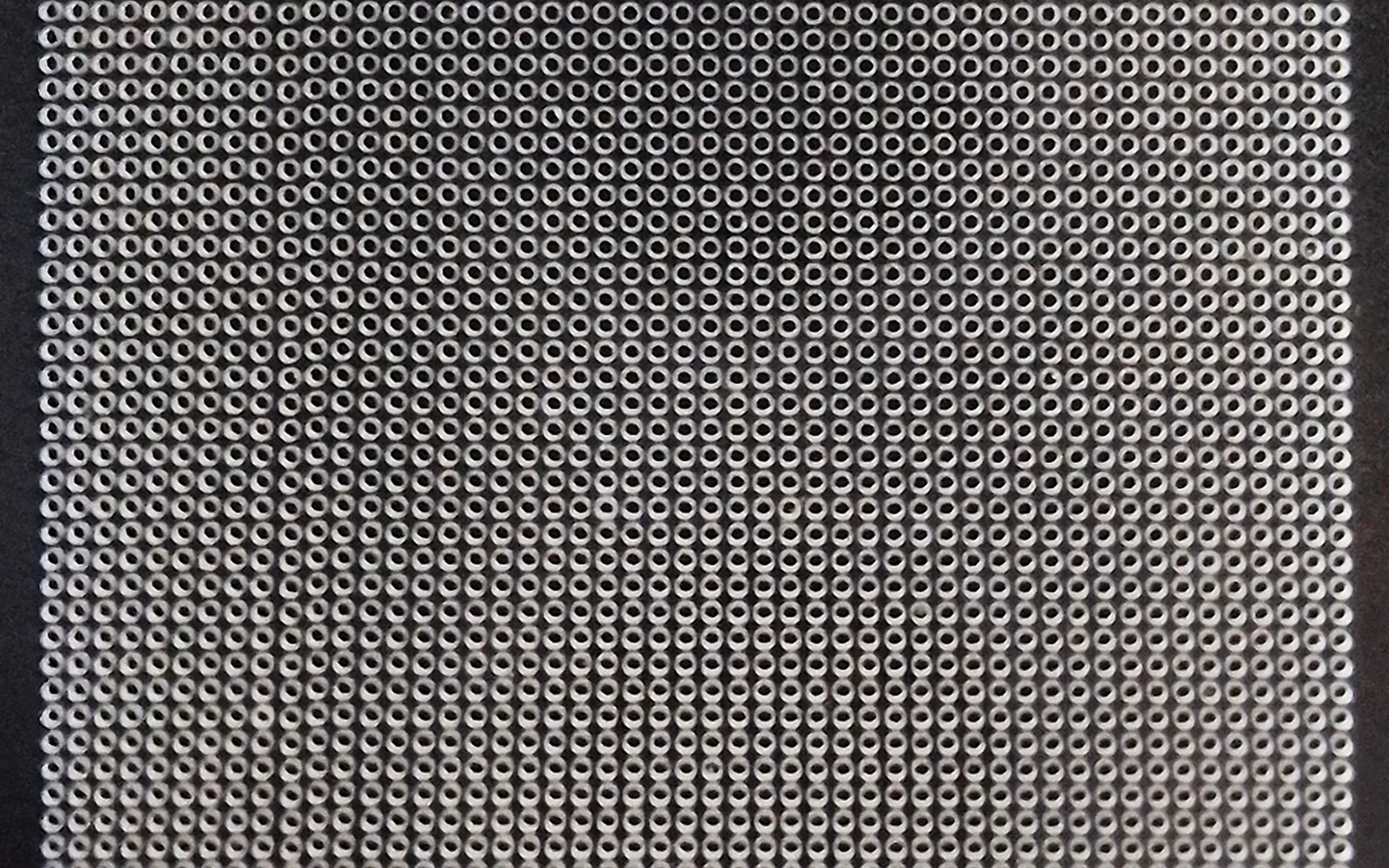
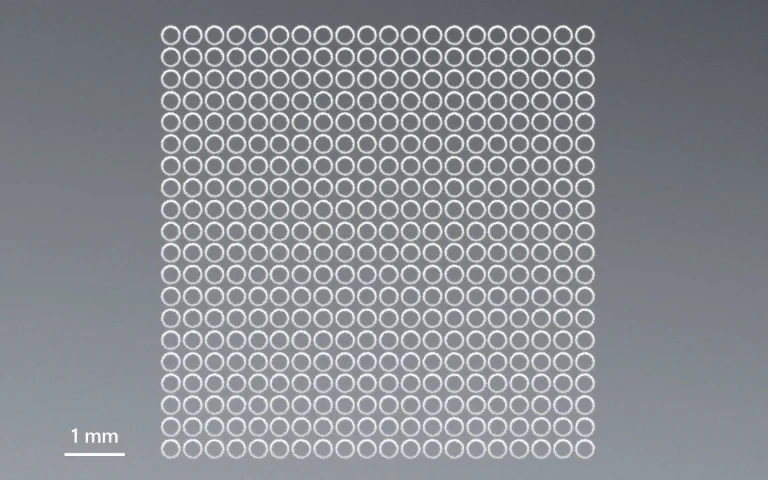
Bottom-up milling of 200 µm holes in SCHOTT BF33/D263 glass.
Courtesy of FTMC.
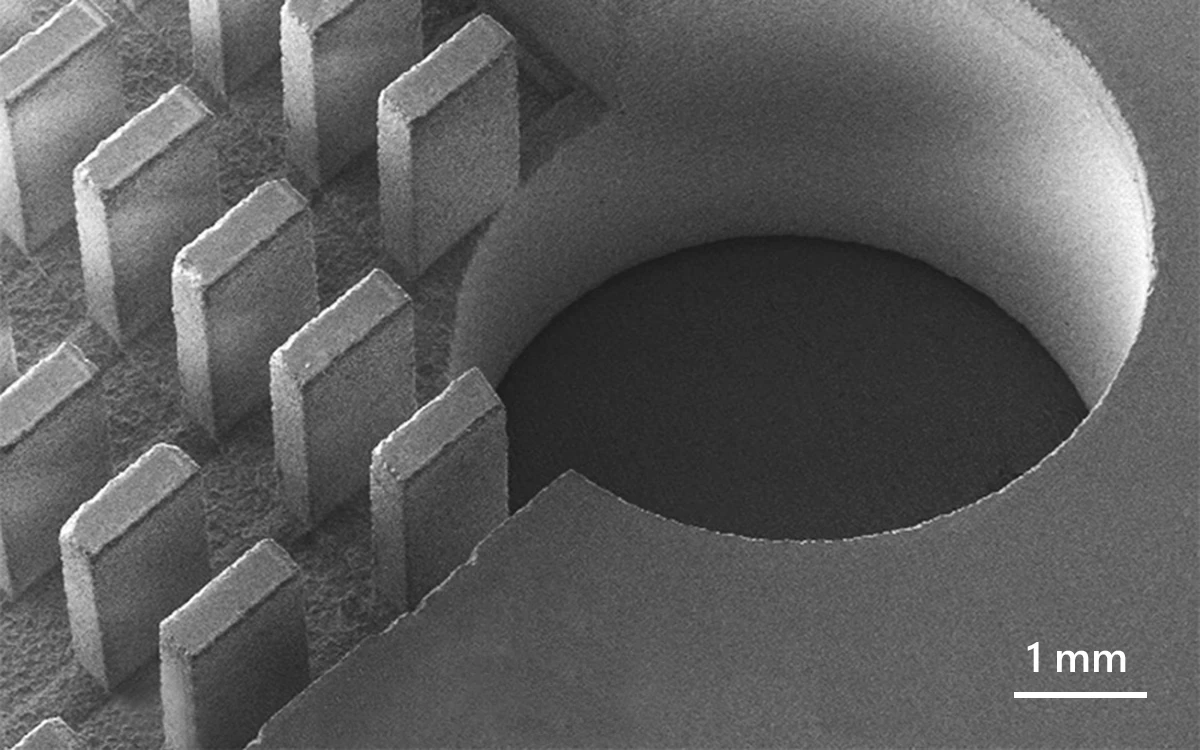
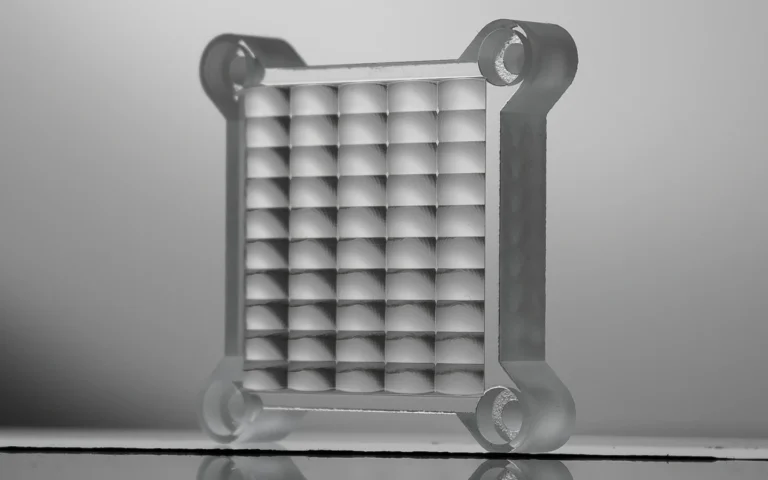
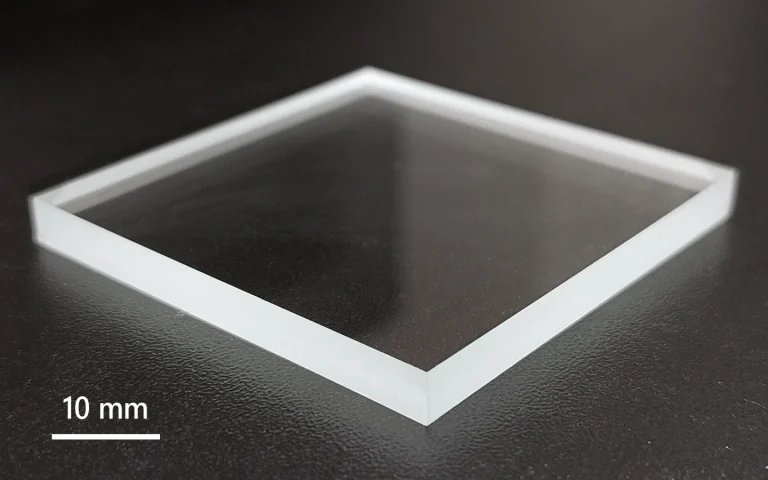
Bottom-up milling of fused-silica glass.
Courtesy of FTMC.
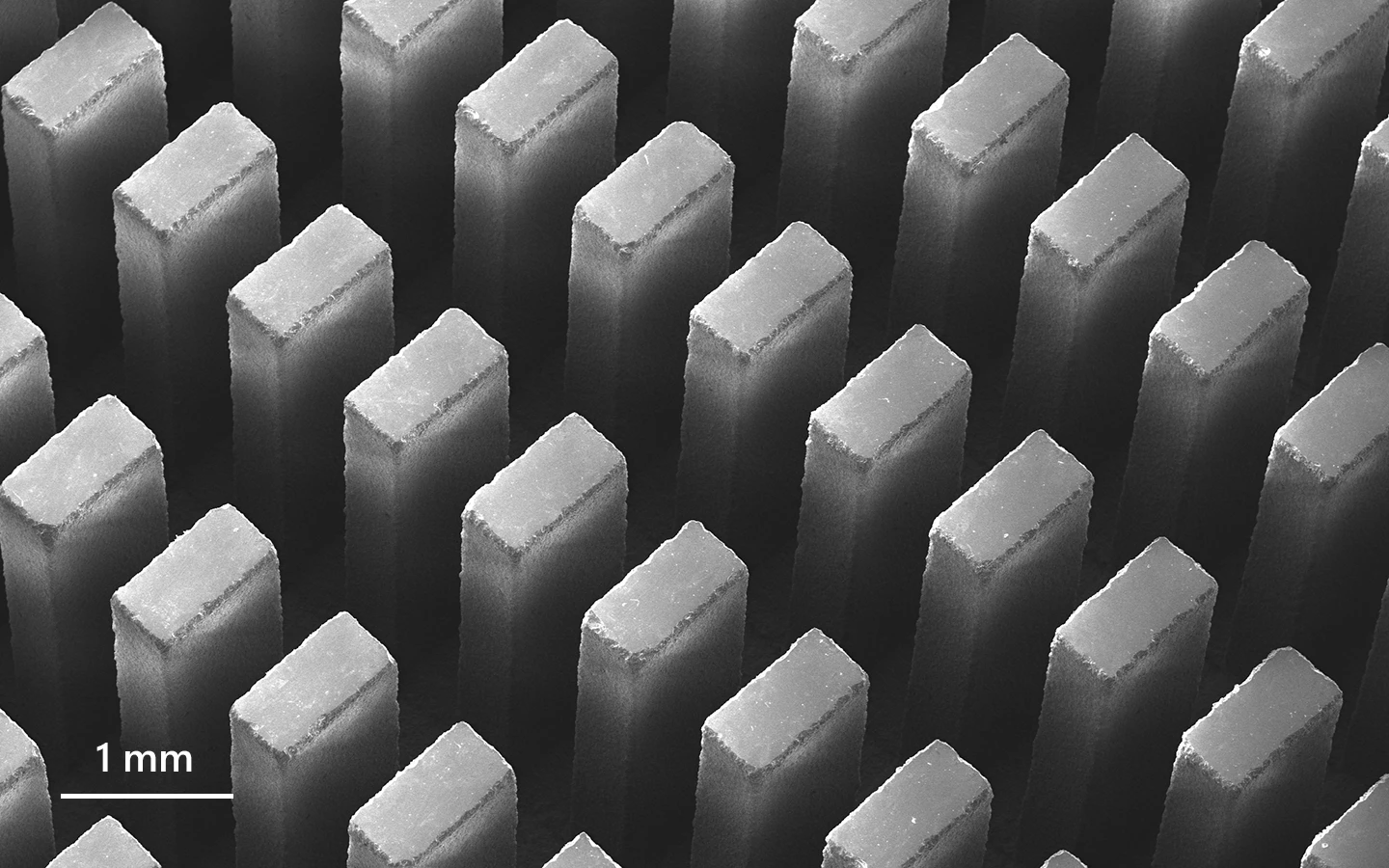
Bottom-up milling of fused-silica glass.
Courtesy of FTMC.
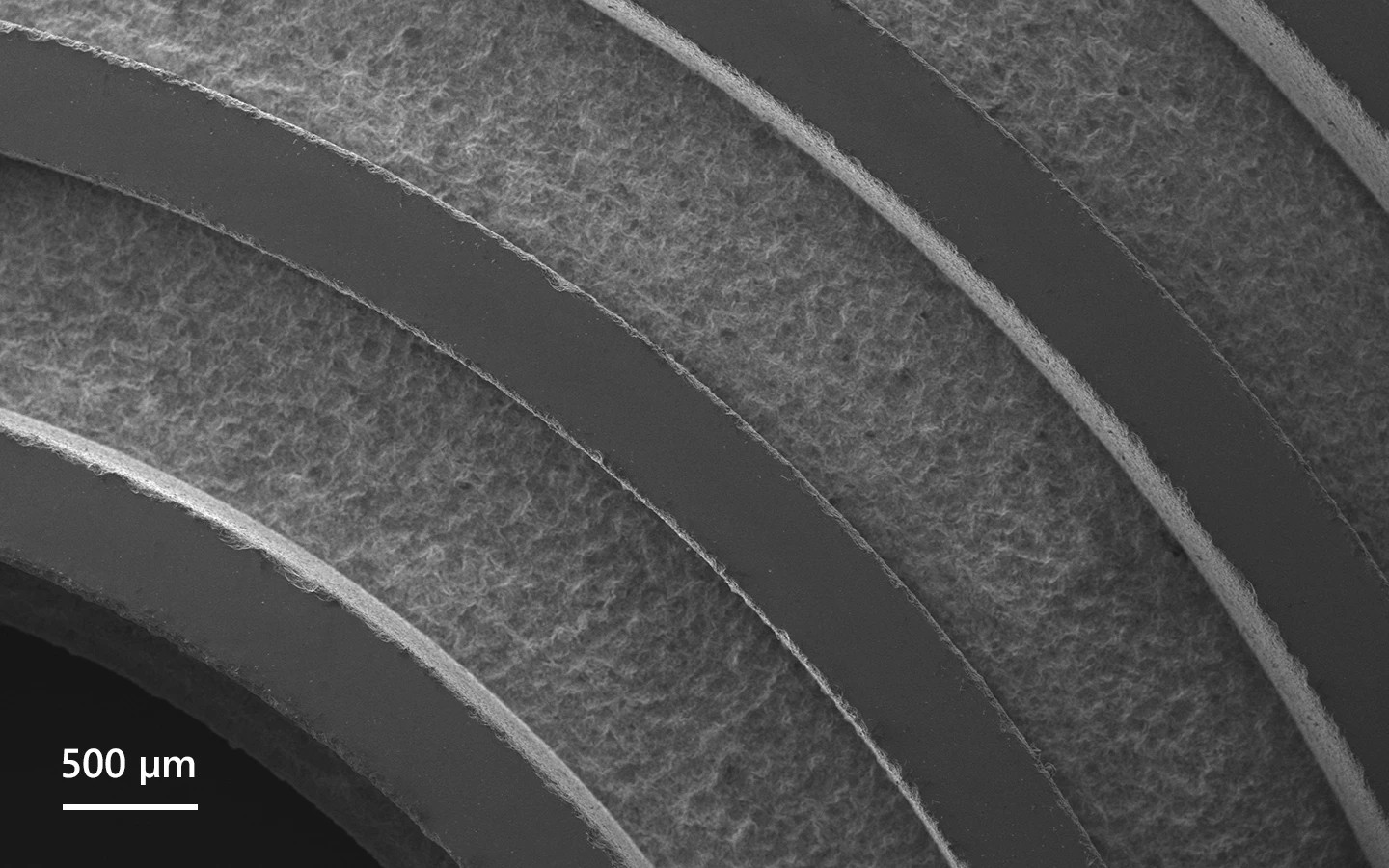
Bottom-up milling of fused-silica glass.
Courtesy of FTMC.