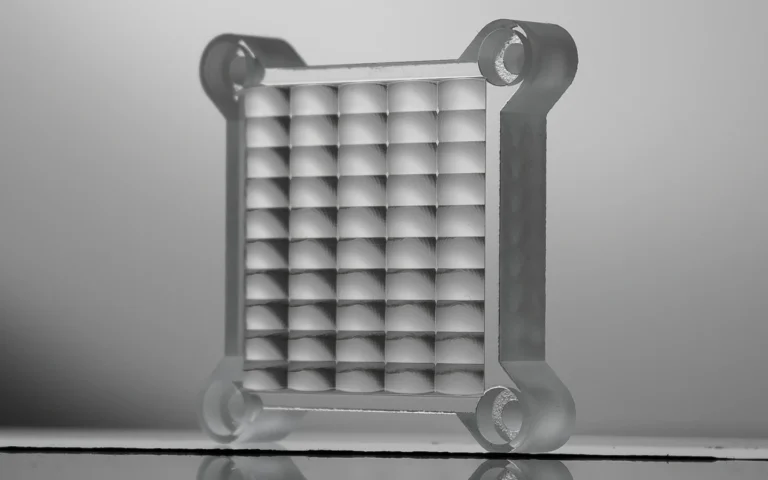
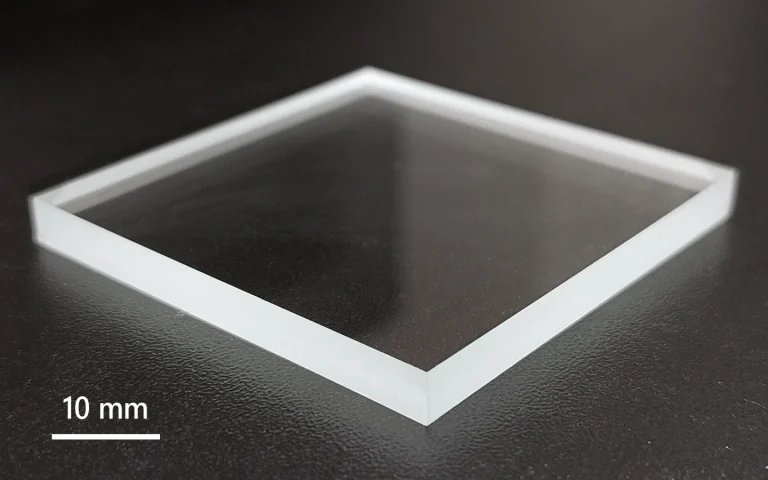
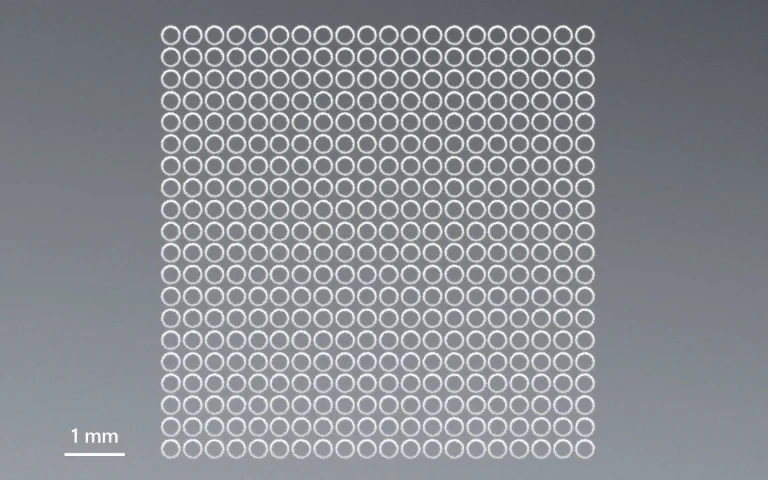
Glass milling in GHz burst mode
Femtosecond laser processing of glass gives high quality due to the ultra-short pulse duration. However, when compared to traditional methods, femtosecond lasers often fall short in throughput. To overcome this limitation, GHz burst technology can increase the process throughput by dividing the high-energy pulse into several sub-pulses.
Using the available laser power in full is challenging, as very high single pulse energies and high repetition rates can lead to defects that compromise process quality. A GHz burst of 70 pulses spreads that energy instead. In combination with a high intra-burst repetition rate of 2 GHz, the process throughput is increased sevenfold compared to single-pulse mode.
Manufacturing examples
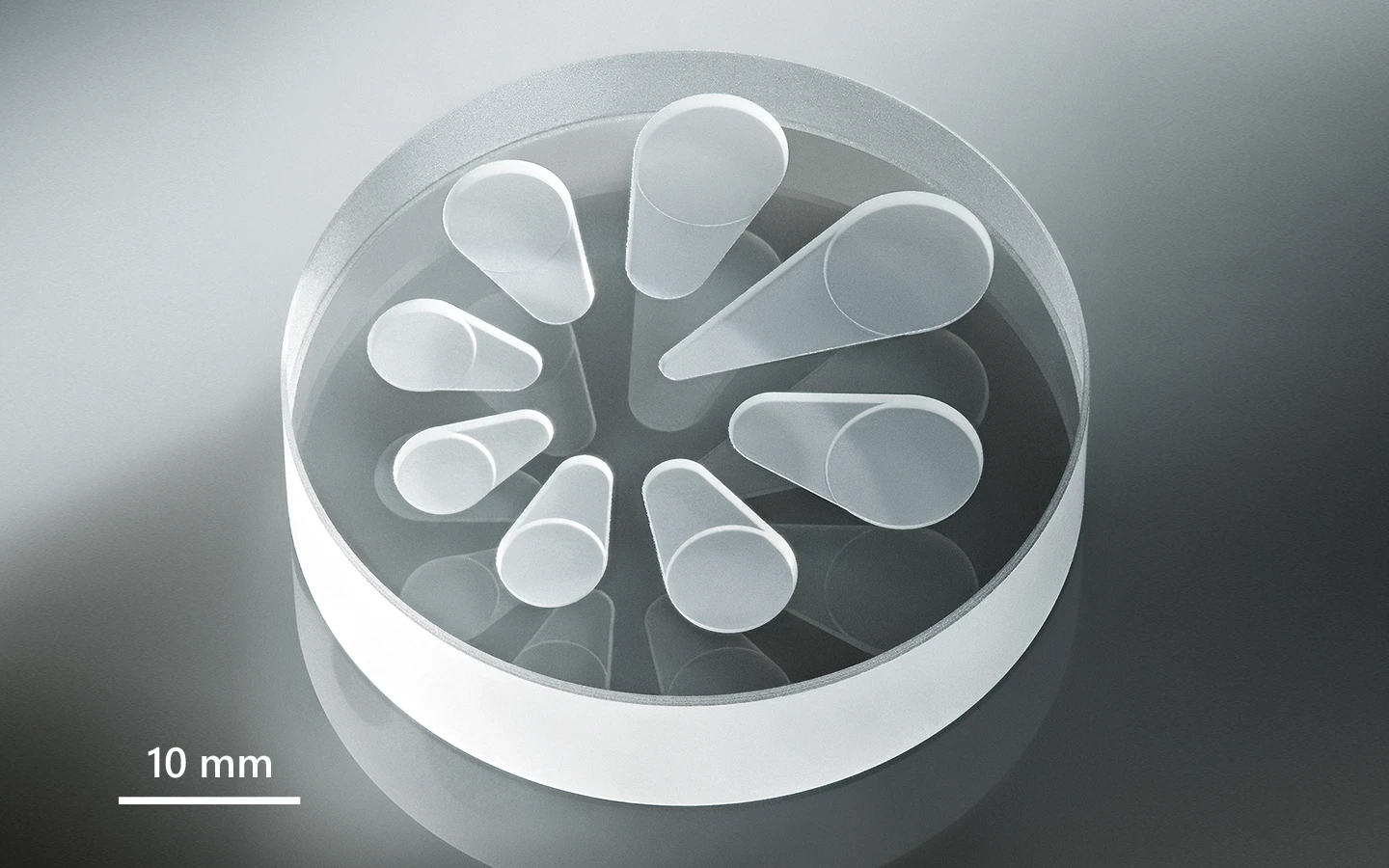
UVFS milling.
Courtesy of FTMC.
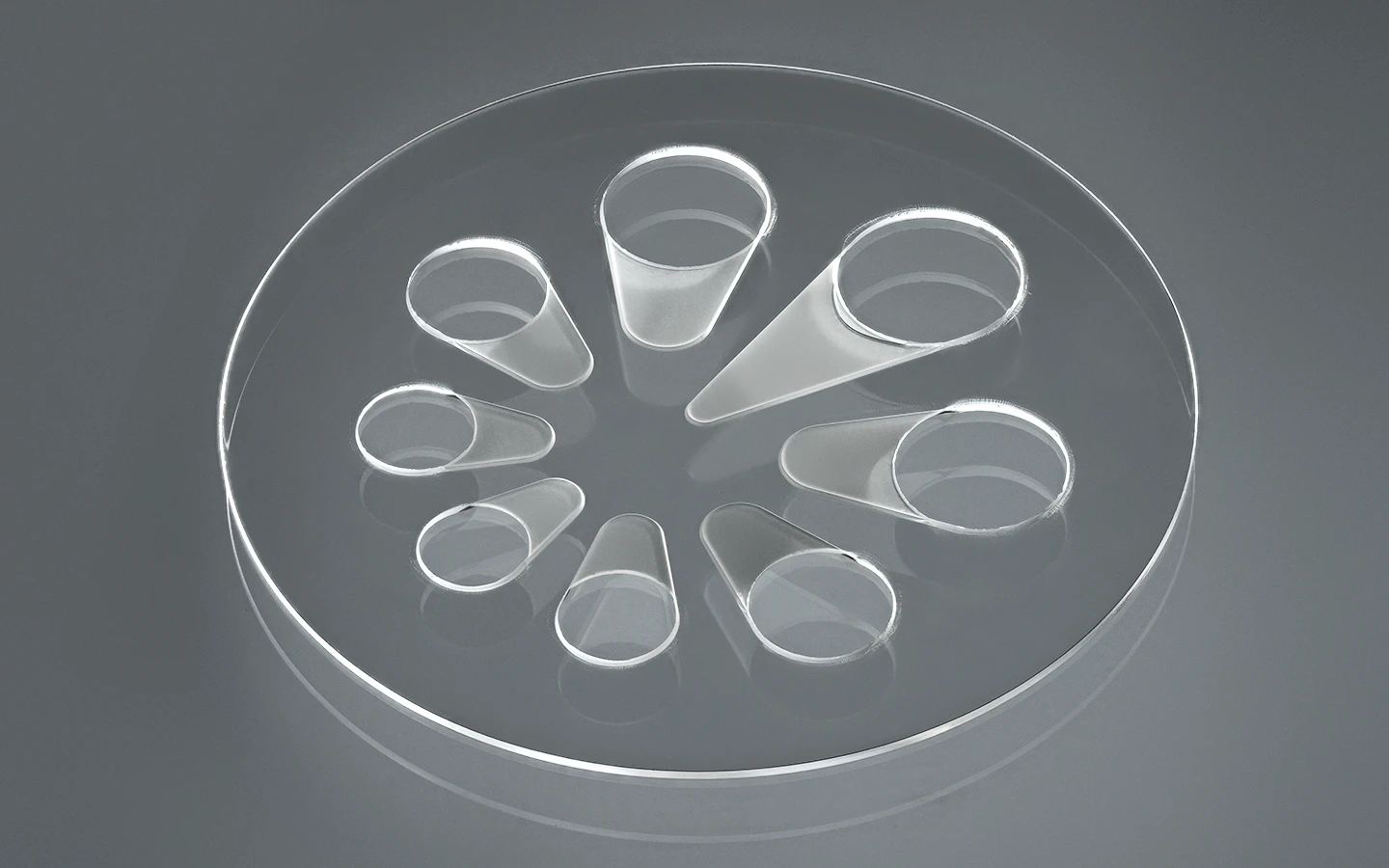
Sapphire milling.
Courtesy of FTMC.

Fused-silica milling.
Courtesy of FTMC.
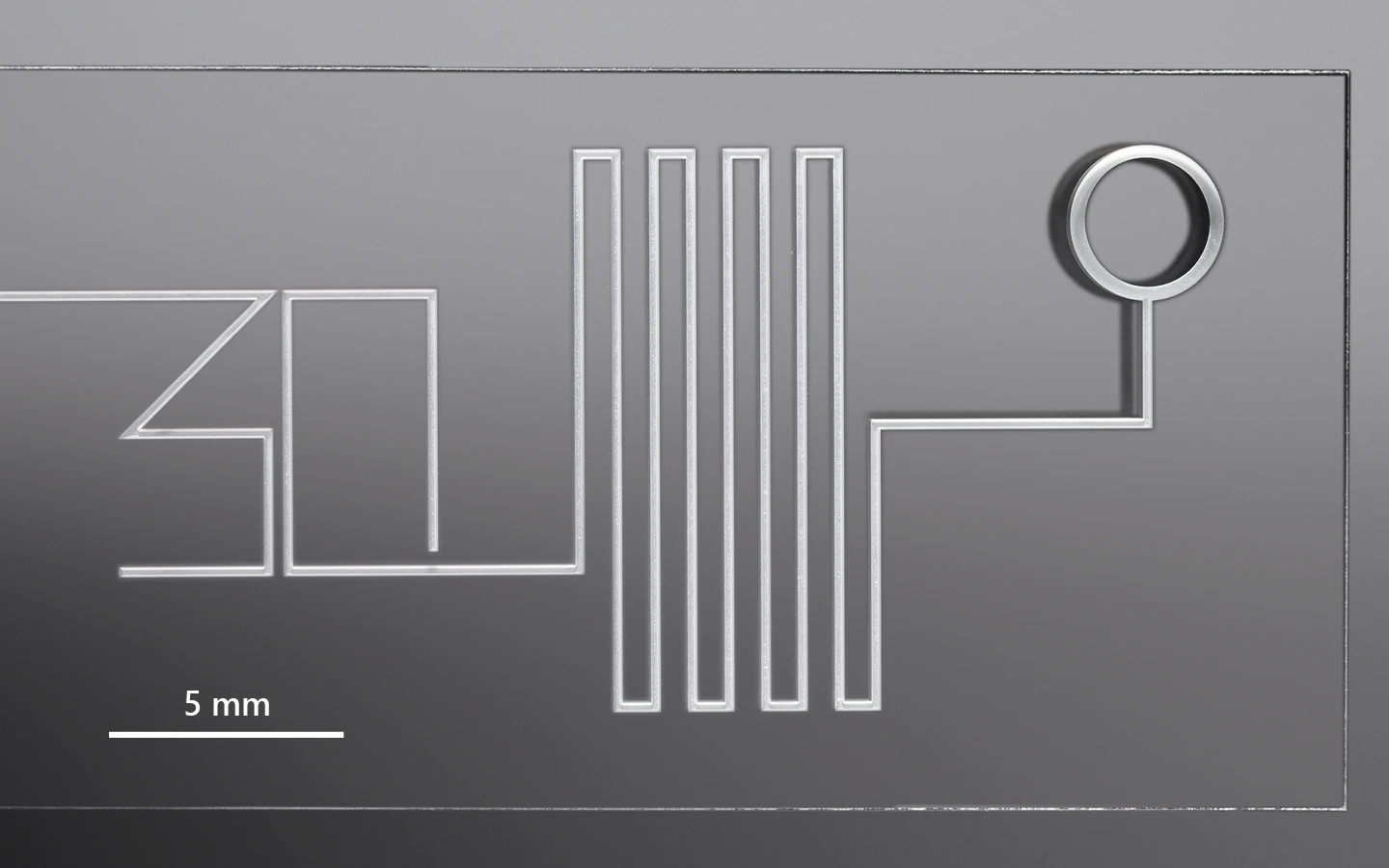
Soda-lime milling.
Courtesy of FTMC.