Gas-phase ion luminescence spectroscopy
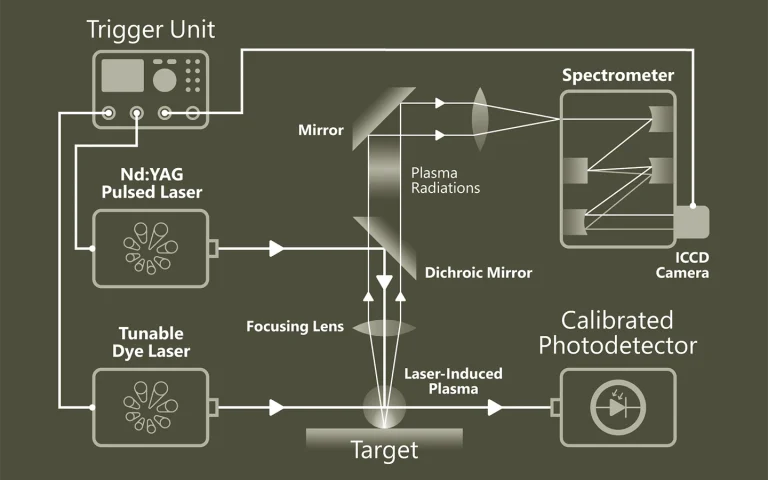
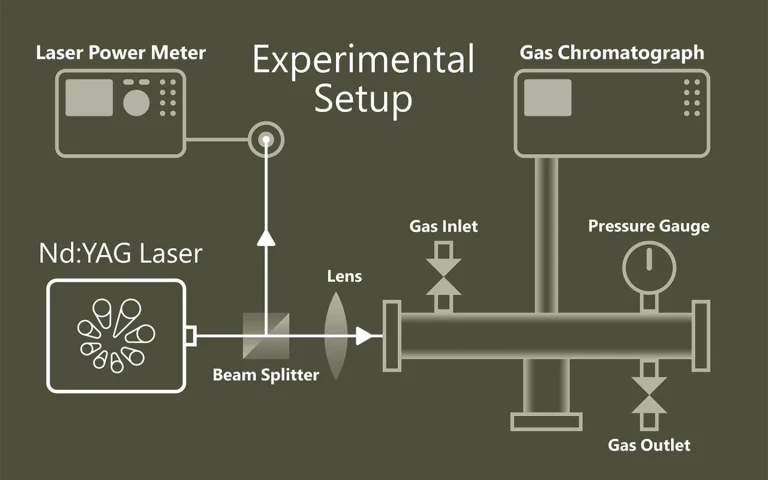
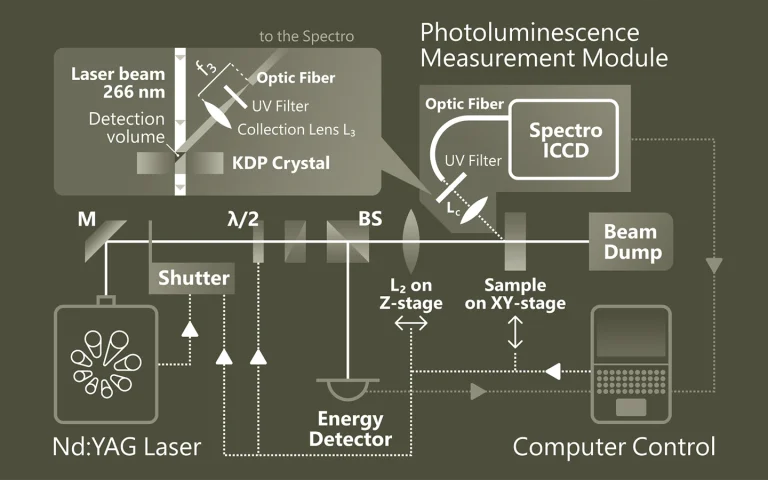
Gas-phase ion luminescence spectroscopy measures intrinsic electronic transition energies with no solvent or matrix present to shift them. Large ions produced by electrospray ionization are stored and mass-selected in a cylindrical Paul trap, irradiated there by a tunable-wavelength NT340 laser from EKSPLA, and the emitted photons are collected into a spectrometer. Its 20 Hz repetition rate leaves time to re-select the ion mass between irradiation events, so impurity ions contribute no fluorescence, and tuning the laser excites dyes that absorb at different wavelengths. The figure shows emission spectra of oxazine dye cations between 500 nm and 750 nm.
The same trap and laser resolve three-dimensional structures of peptides and nucleic acids in the gas phase through Förster resonance energy transfer (FRET). The biomolecules are labeled with donor-acceptor dye pairs such as rhodamines 575 and 640. Transfer efficiency falls off as the inverse sixth power of the donor-acceptor distance, so the measured efficiency gives that distance.

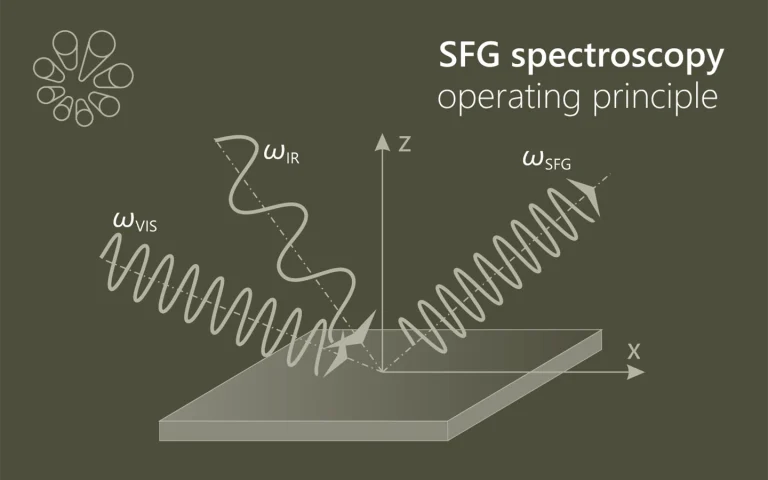
Principle of gas-phase ion luminescence spectroscopy.