
High Power Diode-Pumped Nanosecond Amplifier Systems NanoFlux HP
High Power Diode-Pumped Nanosecond Amplifier Systems
NanoFlux series electro-optically Q-switched nanosecond Nd:YAG amplifier systems deliver high energy pulses at high repetition rates.

| Model | NanoFlux N1k100 | NanoFlux N3k100 | NanoFlux N5k100 |
|---|---|---|---|
| Main specifications 1) | |||
| Output energy | |||
| at 1064 nm | 1000 mJ | 3000 mJ | 5000 mJ |
| at 532 nm 2) 3) | 650 mJ | 1900 mJ | 3000 mJ |
| at 355 nm 2) | inquire | inquire | inquire |
| Pulse repetition rate | 100 Hz | 100 Hz | 100 Hz |
| Pulse duration 4) | 5 ± 1 ns | 5 ± 1 ns | 5 ± 1 ns |
| Pulse energy stability 5) | |||
| at 1064 nm | ≤ 0.5 % | ≤ 0.5 % | ≤ 0.5 % |
| at 532 nm | ≤ 0.8 % | ≤ 0.8 % | ≤ 0.8 % |
| at 355 nm | ≤ 2 % | ≤ 2 % | ≤ 2 % |
| Long-term power drift 6) | ± 2 % | ± 2 % | ± 2 % |
| Beam spatial profile 7) | Super-Gaussian | Super-Gaussian | Super-Gaussian |
| Beam diameter 8) | 10 mm | 12 mm | 18 mm |
| Beam pointing stability 9) | ≤ 30 µrad | ≤ 30 µrad | ≤ 30 µrad |
| Beam divergence | ≤ 0.7 mrad | ≤ 0.5 mrad | ≤ 0.7 mrad |
| Optical pulse jitter 10) | ≤ 0.2 ns | ≤ 0.2 ns | ≤ 0.2 ns |
| Polarization | linear | linear | linear |
| Physical characteristics 11) | |||
| Laser head size (W×L×H mm) | 600×1200×300 | 900×2000×300 | 900×2000×300 |
| Power supply size (W×L×H mm) | 553×600×830 | 553×600×1230 | 553×600×1230 |
| Umbilical length 12) | 2.5 m | 2.5 m | 2.5 m |
| Operating requirements 13) | |||
| Power requirements 14) | 208, 380 or 400 V AC, three phase, 50/60 Hz | 208, 380 or 400 V AC, three phase, 50/60 Hz | 208, 380 or 400 V AC, three phase, 50/60 Hz |
| Power consumption 15) | ≤ 3 kW | ≤ 6 kW | ≤ 10 kW |
| Water supply 15) | ≤ 8 l/min, 2 Bar, max 20 °C | ≤ 12 l/min, 2 Bar, max 20 °C | ≤ 20 l/min, 2 Bar, max 20 °C |
| Operating ambient temperature | 22 ± 2 °C | 22 ± 2 °C | 22 ± 2 °C |
| Storage ambient temperature | 15 – 35 °C | 15 – 35 °C | 15 – 35 °C |
| Relative humidity (non-condensing) | ≤ 80 % | ≤ 80 % | ≤ 80 % |
| Cleanness of the room | ISO Class 7 | ISO Class 7 | ISO Class 7 |
| Model | NanoFlux N1k100 | NanoFlux N3k100 | NanoFlux N5k100 |
|---|
- Due to continuous improvement, all specifications are subject to change without notice. The parameters marked ‘typical’ are typical performance and vary with each unit we manufacture. These parameters can be customized to meet customers’ requirements. All parameters measured at 1064 nm if not stated otherwise.
- Harmonic outputs are optional. Specifications are valid with the respective harmonic module purchased. Outputs are not simultaneous.
- Second harmonic specification is valid when only the SH option is ordered. If TH/FH options are ordered, second harmonic efficiency is reduced to ~50%.
- Standard pulse duration is 5 ns. Other pulse durations can be ordered within the range of 0.2 – 500 ns. Output energy differs depending on duration.
- Under stable environmental conditions, normalized to average pulse energy (relative standard deviation, averaged from 60 s). Measured after 30 min warm-up when the ambient temperature variation is less than ±2 °C during 8 hours.
- Super-Gaussian spatial mode of 6 – 11th order in near field.
- Beam diameter is measured at the laser output at the 1/e2 level.
- Beam pointing stability is measured as the beam centroid movement in the focal plane of a focusing lens (RMS, averaged from 60 s).
- Optical pulse jitter with respect to electrical synchronization pulse outputs: Trig out > 3.5 V @ 50 Ω.
- System sizes are preliminary and depend on the customer’s lab layout and options ordered.
- Longer umbilical with up to 5 m available upon request.
- The laser and auxiliary units must be settled in a place void of dust and aerosols. It is advisable to operate the laser in an air-conditioned room, provided that the laser is placed at a distance from air conditioning outlets. The laser should be positioned on a solid worktable. Access from one side should be ensured.
- Voltage fluctuations allowed are +10 % / -15 % from the nominal value.
- Power consumption and water supply requirements deviate depending on system configuration.
Note: The laser must be connected to the mains electricity at all times. If there will be no mains electricity for longer than 1 hour, then the laser (system) needs warm up for a few hours before switching on.
| Cabinet | Usable height | Height H,mm | Width W, mm | Depth D, mm |
|---|---|---|---|---|
| MR-9 | 9 U | 455.5 (519 1) ) | 553 | 600 |
| MR-12 | 12 U | 589 (653 1) ) | 553 | 600 |
| MR-16 | 16 U | 768 (832 1) ) | 553 | 600 |
| MR-20 | 20 U | 889 (952 1) ) | 553 | 600 |
| MR-25 | 25 U | 1167 (1231 1) ) | 553 | 600 |
| Cabinet | Usable height | Height H,mm | Width W, mm | Depth D, mm |
|---|
- Full height with wheels.
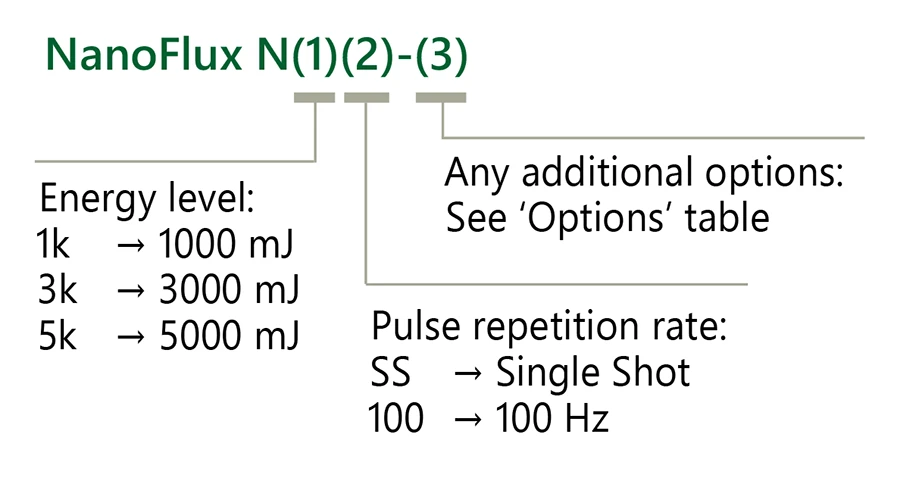
Ordering information of NanoFlux HP lasers.

Typical NanoFlux HP system near field beam profile at 1064 nm.
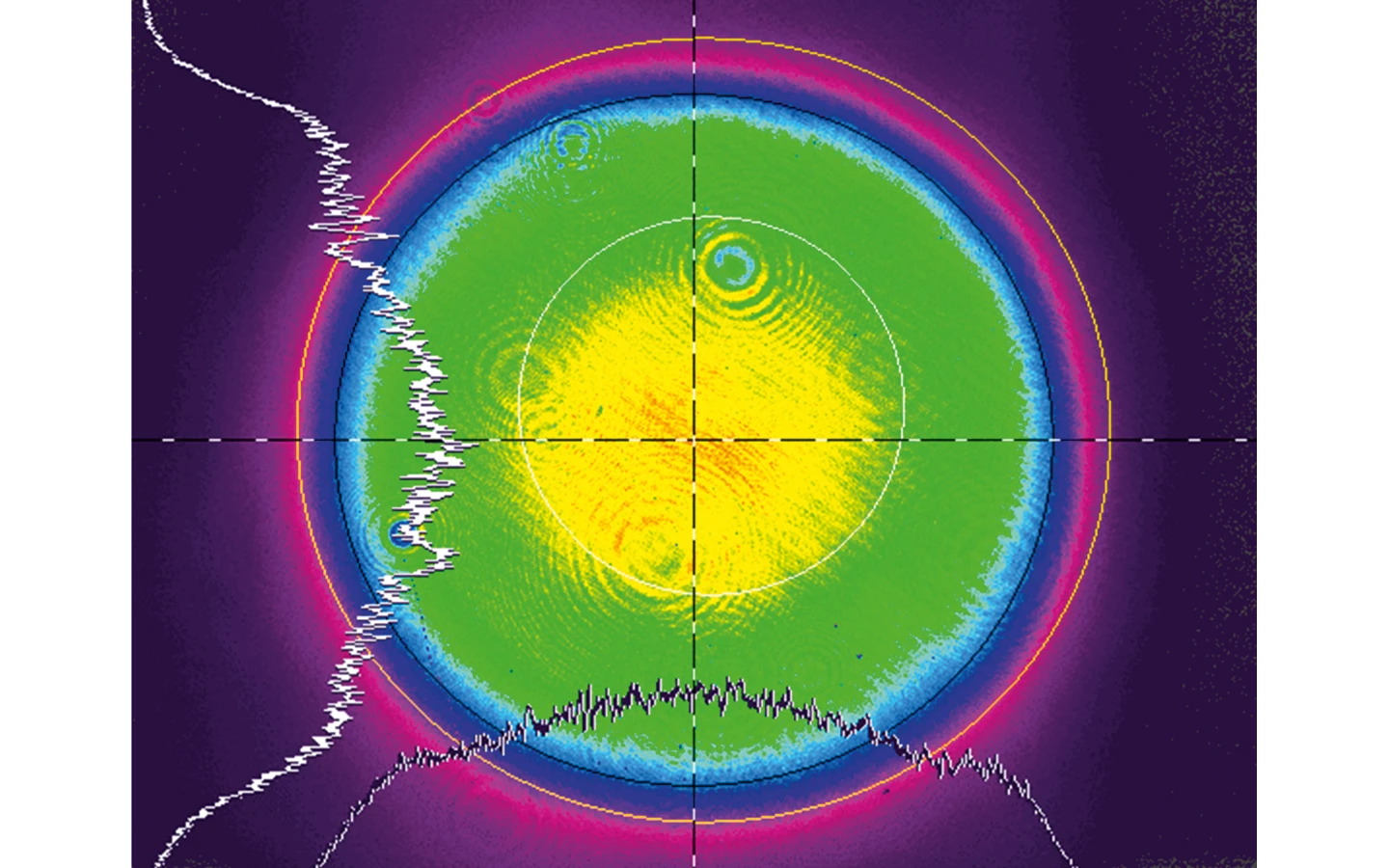
Typical NanoFlux HP system near field beam profile at 532 nm.

Typical NanoFlux HP system near field beam profile with Gaussian beam profile option.
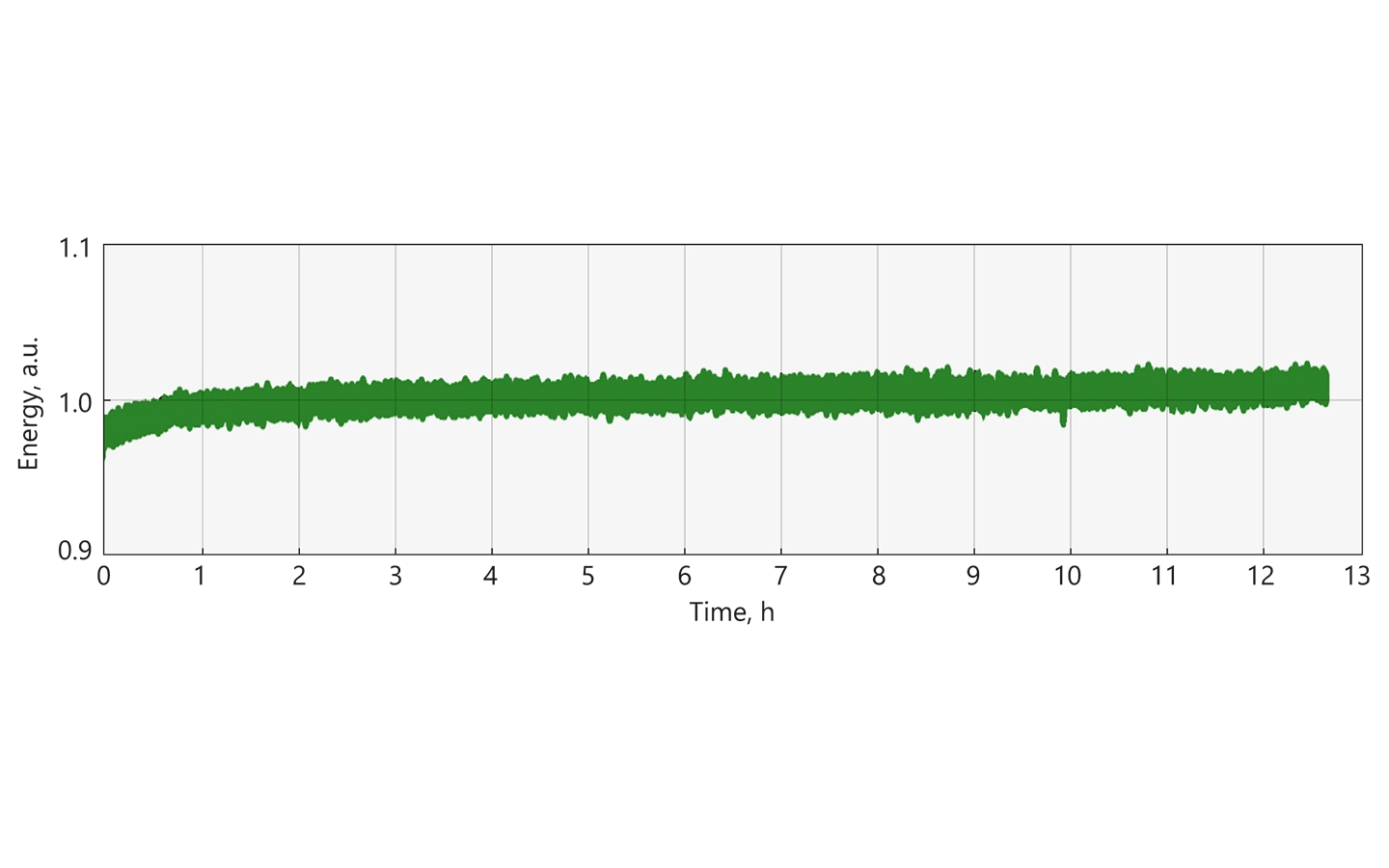
Typical long-term energy stability of NanoFlux HP system.
Typical external view of NanoFlux HP series laser system.
Actual design might vary.

An example of NanoFlux HP system external dimensions.
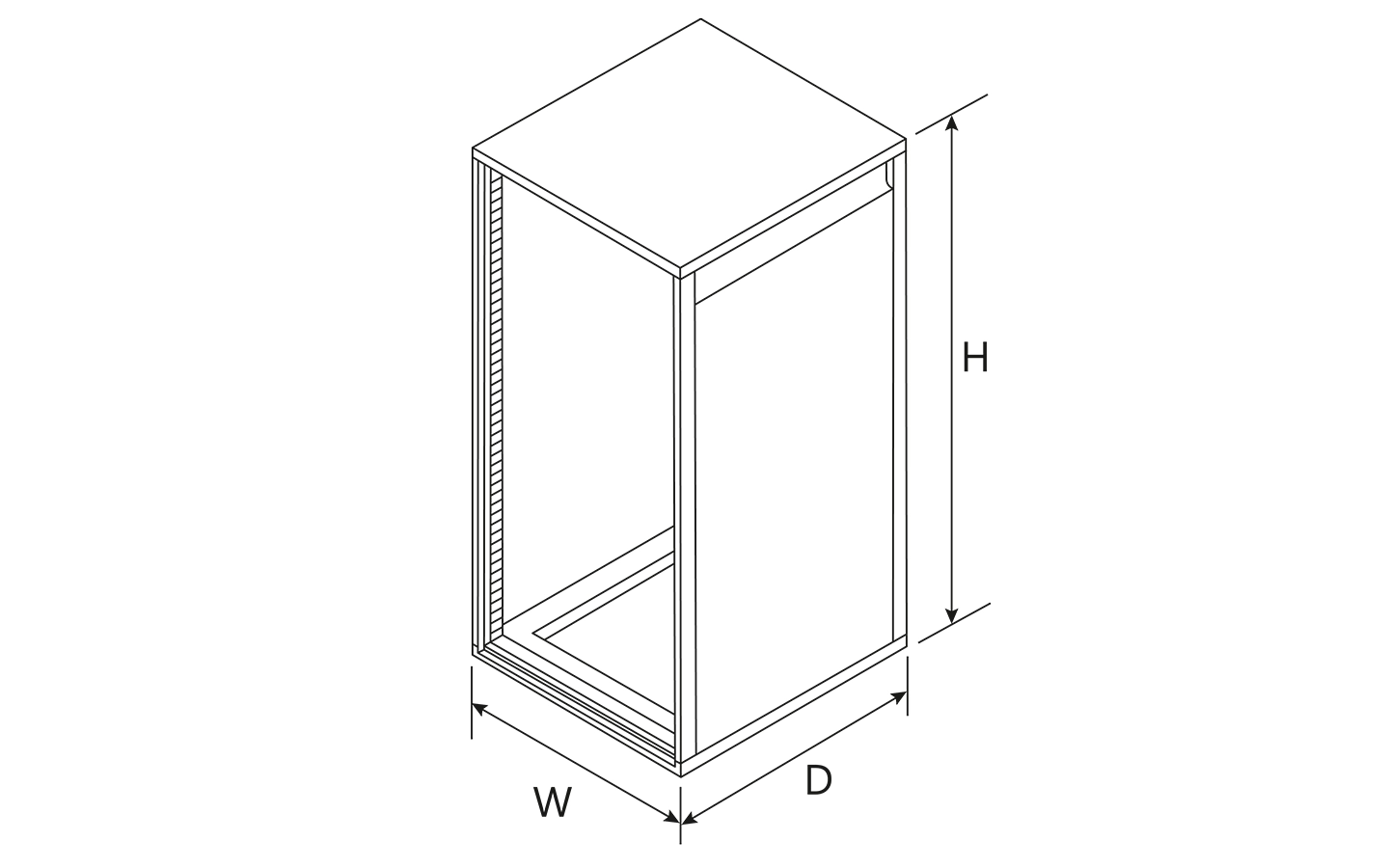
Typical NanoFlux HP laser system power supply dimensions.
MR rack used depends on the laser model.
