NanoFlux HP series
High Power Diode-Pumped Nanosecond Amplifier Systems
NanoFlux series electro-optically Q-switched nanosecond Nd:YAG amplifier systems deliver high energy pulses at high repetition rates.
Features
- Up to 5 J at 1064 nm output pulse energy
- Up to 1 kHz repetition rate
- Multi-channel version 2 J per channel at 1064 nm
- Pulse durations from 2 ns to 500 ns
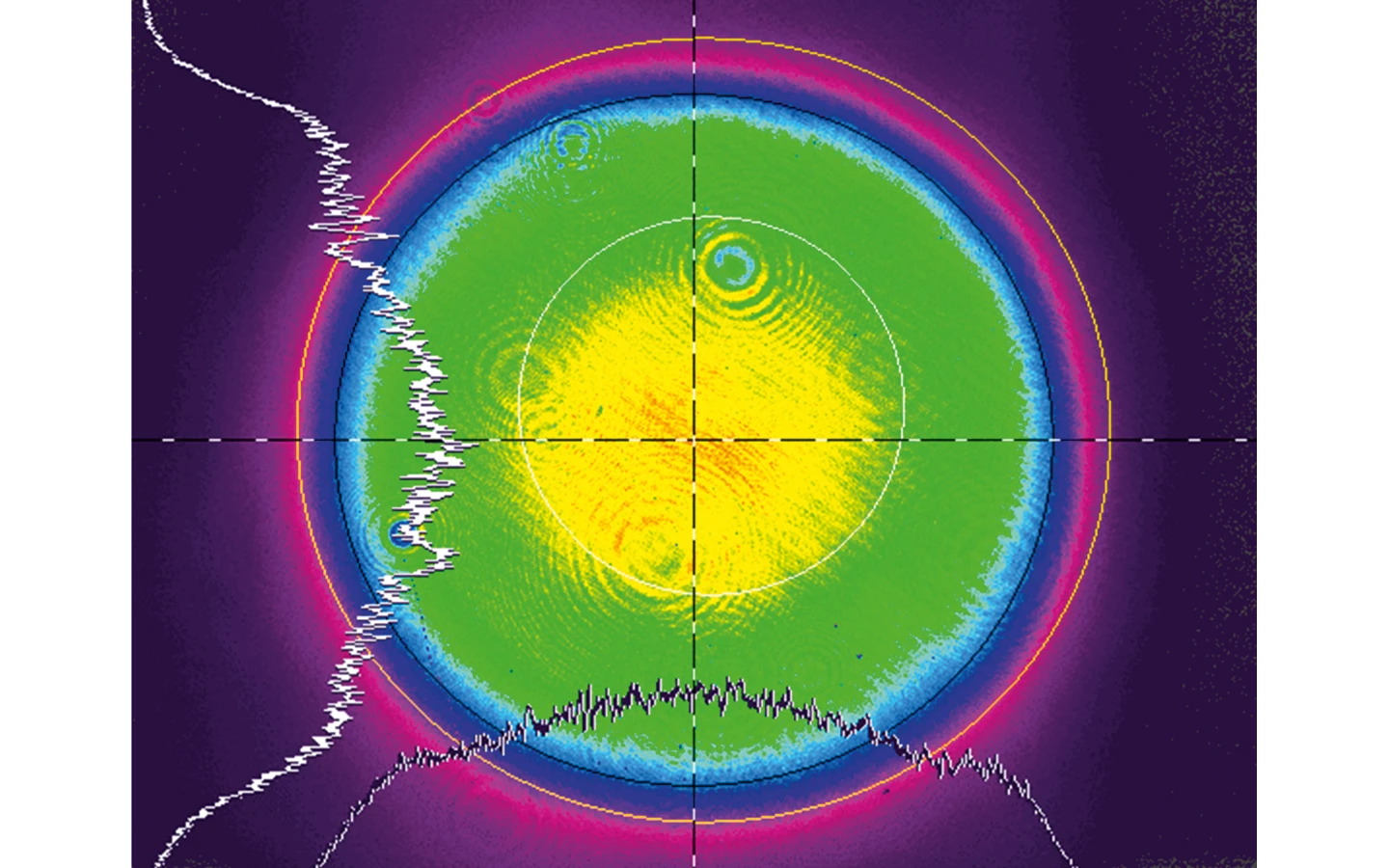
- Spatial Super-Gaussian beam profile
- Low maintenance cost and long diode lifetime
- Variable pulse duration and temporal pulse shape control (AWG) option available
- Various customization possibilities to tailor for specific application
- High efficiency diode pumping chambers
- Small laser head footprint and OEM integration upon request
- Internal system diagnostics
- Thermally induced birefringence compensation for high pulse repetition rates
- Integrated vacuum system for image translation for smooth Super-Gaussian beam profile
- Burst version available
- Optional thermally stabilized second and third harmonics generators
- Optional industrial grade, portable laser housing with integrated power supplies and cooling units
Applications
- Thomson Scattering
- Multi-stage OPCPA pumping
- Non-linear optics
- Ti:S pumping
Description
NanoFlux series electro-optically Q-switched nanosecond Nd:YAG amplifier systems produce high‑energy pulses at high repetition rates. A diode-pumped Q-switched nanosecond laser, based on proven technology, serves as the system master oscillator. The pulses it produces are further amplified to the high-energy output pulses featuring a Super-Gaussian beam profile. The laser system master oscillator output pulses as short as several nanoseconds, featuring a uniform beam profile and low divergence. Alternatively, customers own seed source can be implemented as master oscillator and amplified to required energy level for further amplification in main power amplifiers. Power amplifiers are a chain of low-maintenance diode-pumped single and double pass amplifiers where pulses are amplified up to the required energy. During amplification, spatial beam shaping is employed in order to get a Super-Gaussian beam shape at the output.
Thermally stabilized angle-tuned harmonic generators assure stable second and third harmonic outputs. High spectral purity of harmonics output radiation is achieved using dichroic mirrors.
System control can be performed in several ways.
Using a laser system control pad, via USB and LAN ports (RS232 as optional), using a personal computer with supplied software for the Windows operating system. To tailor the laser for specific applications or requirements, a number of customization possibilities are available; e.g., an industrial-grade, portable laser housing with integrated power supplies and cooling units; customer’s seed laser integration; multi-channel outputs; burst amplification, and others.
Specifications
| Model | NanoFlux N400100 | NanoFlux N5k100 | NanoFlux N2001k | NanoFlux N2k100-Burst |
|---|---|---|---|---|
| Main specifications 1) | ||||
| Output energy | ||||
| at 1064 nm | 400 mJ | 5000 mJ | 200 mJ | 2000 mJ |
| at 532 nm 2) 3) | 260 mJ | 3000 mJ | 130 mJ | 1300 mJ |
| at 355 nm 2) | 120 mJ | inquire | 60 mJ | 600 mJ |
| Pulse repetition rate | 100 Hz | 100 Hz | 1 kHz | 100 Hz |
| Pulse duration 4) | 5 ± 1 ns | 5 ± 1 ns | 5 ± 1 ns | Adjustable bursts |
| Pulse energy stability 5) | ||||
| at 1064 nm | ≤ 0.5 % | ≤ 0.5 % | ≤ 0.5 % | ≤ 2 % |
| at 532 nm | ≤ 0.8 % | ≤ 0.8 % | ≤ 0.8 % | ≤ 4 % |
| at 355 nm | ≤ 2 % | ≤ 2 % | ≤ 2 % | – |
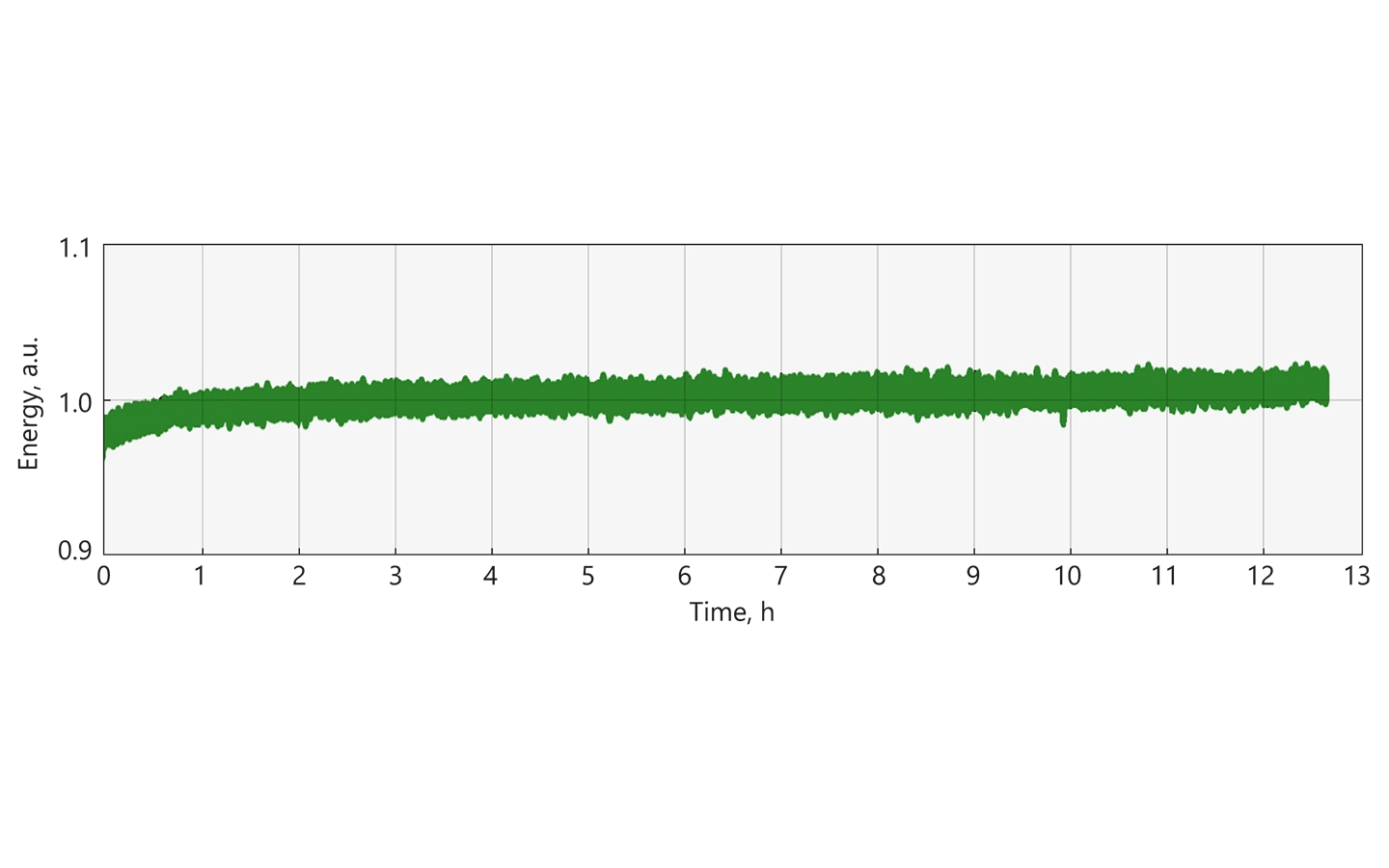
| Long-term power drift 6) | ± 2 % | ± 2 % | ± 2 % | ± 2 % |
| Beam spatial profile 7) | Super-Gaussian | Super-Gaussian | Super-Gaussian | Super-Gaussian |
| Beam diameter 8) | 7 mm | 15 mm | 7 mm | 12 mm |
| Beam pointing stability 9) | ≤ 30 µrad | ≤ 30 µrad | ≤ 30 µrad | ≤ 30 µrad |
| Beam divergence | ≤ 0.7 mrad | ≤ 0.5 mrad | ≤ 0.7 mrad | ≤ 0.5 mrad |
| Optical pulse jitter 10) | ≤ 0.2 ns | ≤ 0.2 ns | ≤ 0.2 ns | ≤ 0.2 ns |
| Polarization | linear | linear | linear | linear |
| Physical characteristics 11) | ||||
| Laser head size (W×L×H mm) | 600×1200×300 | 900×2000×300 | 600×1200×300 | 900×1800×300 |
| Power supply size (W×L×H mm) | 553×600×830 | 553×600×1230 | 553×600×830 | 553×600×1800 |
| Umbilical length 12) | 2.5 m | 2.5 m | 2.5 m | 2.5 m |
| Operating requirements 13) | ||||
| Power requirements 14) | 208, 380 or 400 V AC, three phase, 50/60 Hz | 208, 380 or 400 V AC, three phase, 50/60 Hz | 208, 380 or 400 V AC, three phase, 50/60 Hz | 208, 380 or 400 V AC, three phase, 50/60 Hz |
| Power consumption 15) | ≤ 6 kW | ≤ 20 kW | ≤ 10 kW | ≤ 10 kW |
| Water supply 15) | ≤ 8 l/min, 2 Bar, max 20 °C | ≤ 20 l/min, 2 Bar, max 20 °C | ≤ 12 l/min, 2 Bar, max 20 °C | ≤ 12 l/min, 2 Bar, max 20 °C |
| Operating ambient temperature | 22 ± 2 °C | 22 ± 2 °C | 22 ± 2 °C | 22 ± 2 °C |
| Storage ambient temperature | 15 – 35 °C | 15 – 35 °C | 15 – 35 °C | 15 – 35 °C |
| Relative humidity (non-condensing) | ≤ 80 % | ≤ 80 % | ≤ 80 % | ≤ 80 % |
| Cleanness of the room | ISO Class 7 | ISO Class 7 | ISO Class 7 | ISO Class 7 |
| Model | NanoFlux N400100 | NanoFlux N5k100 | NanoFlux N2001k | NanoFlux N2k100-Burst |
|---|
- Due to continuous improvement, all specifications are subject to change without notice. The parameters marked ‘typical’ are typical performance and vary with each unit we manufacture. These parameters can be customized to meet customers’ requirements. All parameters measured at 1064 nm if not stated otherwise.
- Harmonic outputs are optional. Specifications are valid with the respective harmonic module purchased. Outputs are not simultaneous.
- Second harmonic specification is valid when only the SH option is ordered. If TH/FH options are ordered, second harmonic efficiency is reduced to ~50%.
- Standard pulse duration is 5 ns. Other pulse durations can be ordered within the range of 0.2 – 500 ns. Output energy differs depending on duration.
- Under stable environmental conditions, normalized to average pulse energy (RMS, averaged from 60 s). Energy stability in burst mode depends on the temporal burst shape.
- Measured after 30 min warm-up when the ambient temperature variation is less than ±2 °C during 8 hours.
- Super-Gaussian spatial mode of 6 – 11th order in near field.
- Beam diameter is measured at the laser output at the 1/e2 level for Gaussian beams and the FWHM level for Super-Gaussian beams.
- Beam pointing stability is measured as the beam centroid movement in the focal plane of a focusing lens (RMS, averaged from 60 s).
- Optical pulse jitter with respect to electrical synchronization pulse outputs: Trig out > 3.5 V @ 50 Ω.
- System sizes are preliminary and depend on the customer’s lab layout and options ordered.
- Longer umbilical with up to 5 m available upon request.
- The laser and auxiliary units must be settled in a place void of dust and aerosols. It is advisable to operate the laser in an air-conditioned room, provided that the laser is placed at a distance from air conditioning outlets. The laser should be positioned on a solid worktable. Access from one side should be ensured.
- Voltage fluctuations allowed are +10 % / -15 % from the nominal value.
- Power consumption and water supply requirements deviate depending on system configuration.
Note: The laser must be connected to the mains electricity at all times. If there will be no mains electricity for longer than 1 hour, then the laser (system) needs warm up for a few hours before switching on.
Options
| Option | Description | Comment |
|---|---|---|
| – AWG | Arbitrary waveform generator | Temporal pulse shape control in 1 – 50 ns range by 125 ps step |
| – AW | Water-air cooling option | Replaces or supplements Water-to-Water cooling unit. Heat dissipation equals total power consumption |
| – External vacuum supply | External vacuum pump and tubing | |
| – Multiple channel option | Multiple outputs of same or different wavelength/energy | Up to 8 channels |
| – G | Gaussian like spatial beam profile | Reduces the output energy of fundamental by ~80 % |
| Option | Description | Comment |
|---|
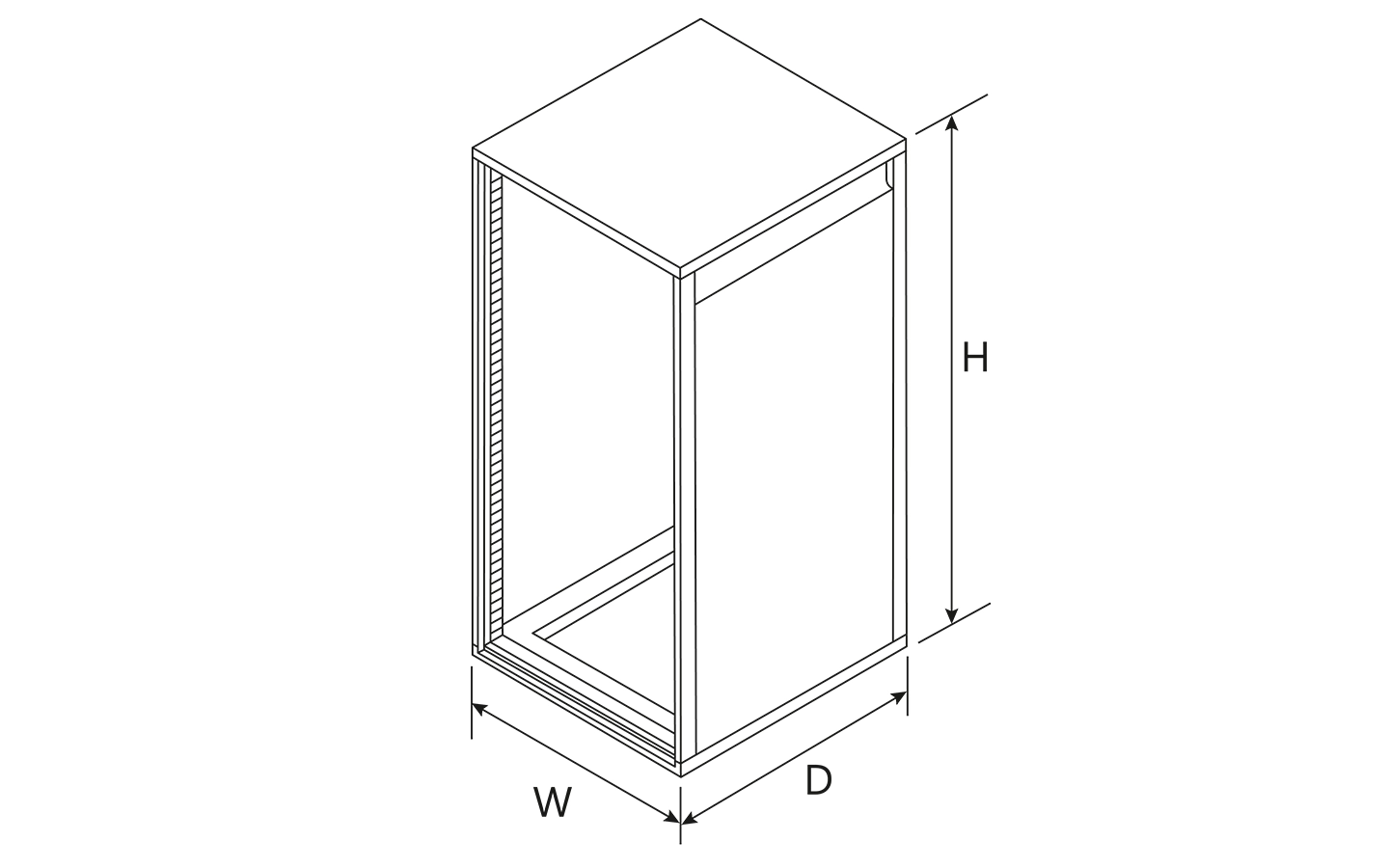
Power supply
| Cabinet | Usable height | Height H,mm | Width W, mm | Depth D, mm |
|---|---|---|---|---|
| MR-9 | 9 U | 455.5 (519 1) ) | 553 | 600 |
| MR-12 | 12 U | 589 (653 1) ) | 553 | 600 |
| MR-16 | 16 U | 768 (832 1) ) | 553 | 600 |
| MR-20 | 20 U | 889 (952 1) ) | 553 | 600 |
| MR-25 | 25 U | 1167 (1231 1) ) | 553 | 600 |
| Cabinet | Usable height | Height H,mm | Width W, mm | Depth D, mm |
|---|
- Full height with wheels.
Performance
Drawings
Publications
Characterization and calibration of the Thomson scattering diagnostic suite for the C-2W field-reversed configuration experiment
The new C-2W Thomson scattering (TS) diagnostic consists of two individual subsystems for monitoring electron temperature (Te) and density (ne): one system in the central region is currently operational, and the second system is being commissioned to monitor the open field line region. Validating the performance of the TS’s custom designed system components and unique calibration of the detection system and diagnostic as a whole is crucial to obtaining high precision Te and ne profiles of C-2W’s plasma. The major components include a diode-pumped Nd:YAG laser which produces 35 pulses at up to 20 kHz, uniquely designed collection lenses with a fast numerical aperture, and uniquely designed polychromators with filters sets to optimize a Te ranging from 10 eV to 2 keV. This paper describes the design principles and techniques used to characterize the main components of the TS diagnostic on C-2W, as well as the results of Rayleigh scattering calibrations performed for the whole system response.
Thomson scattering systems on C-2W field-reversed configuration plasma experiment
TAE Technologies’ newly constructed C-2W experiment aims to improve the ion and electron temperatures in a sustained field-reversed configuration plasma. A suite of Thomson scattering systems has been designed and constructed for electron temperature and density profile measurements. The systems are designed for electron densities of 1 × 1012 cm−3 to 2 × 1014 cm−3 and temperature ranges from 10 eV to 2 keV. The central system will provide profile measurements of Te and ne at 16 radial locations from r = −9 cm to r = 64 cm with a temporal resolution of 20 kHz for 4 pulses or 1 kHz for 30 pulses. The jet system will provide profile measurements of Te and ne at 5 radial locations in the open field region from r = −5 cm to r = 15 cm with a temporal resolution of 100 Hz. The central system and its components have been characterized, calibrated, installed, and commissioned. A maximum-likelihood algorithm has been applied for data processing and analysis.