
Polymer cutting and milling
Polymers are used across automotive, medical and consumer electronics manufacturing, and they conduct heat poorly. Heat from a long pulse therefore stays where it lands, and the result is a wide heat-affected zone, warping and carbonization. Femtosecond pulses remove material before the heat spreads, so the edge stays clean.
FemtoLux suits this work on two counts. Its pulse duration is short enough to process polymer without a significant thermal load, and its 4 MHz repetition rate carries the throughput, with scanning speeds of several meters per second.
A 10 mm circle is cut from polymer film in 400 milliseconds, at a cutting speed of 300 mm/s. Shorter wavelengths tighten the cut further: moving to 515 or 343 nm reduces the heat-affected zone by 27%, to 12.7 µm in polyimide at 515 nm. The trade-off is throughput, because average power falls at shorter wavelengths.

Ekspla logo and arc slots cut through polyimide film.
Courtesy of FTMC.
Manufacturing examples
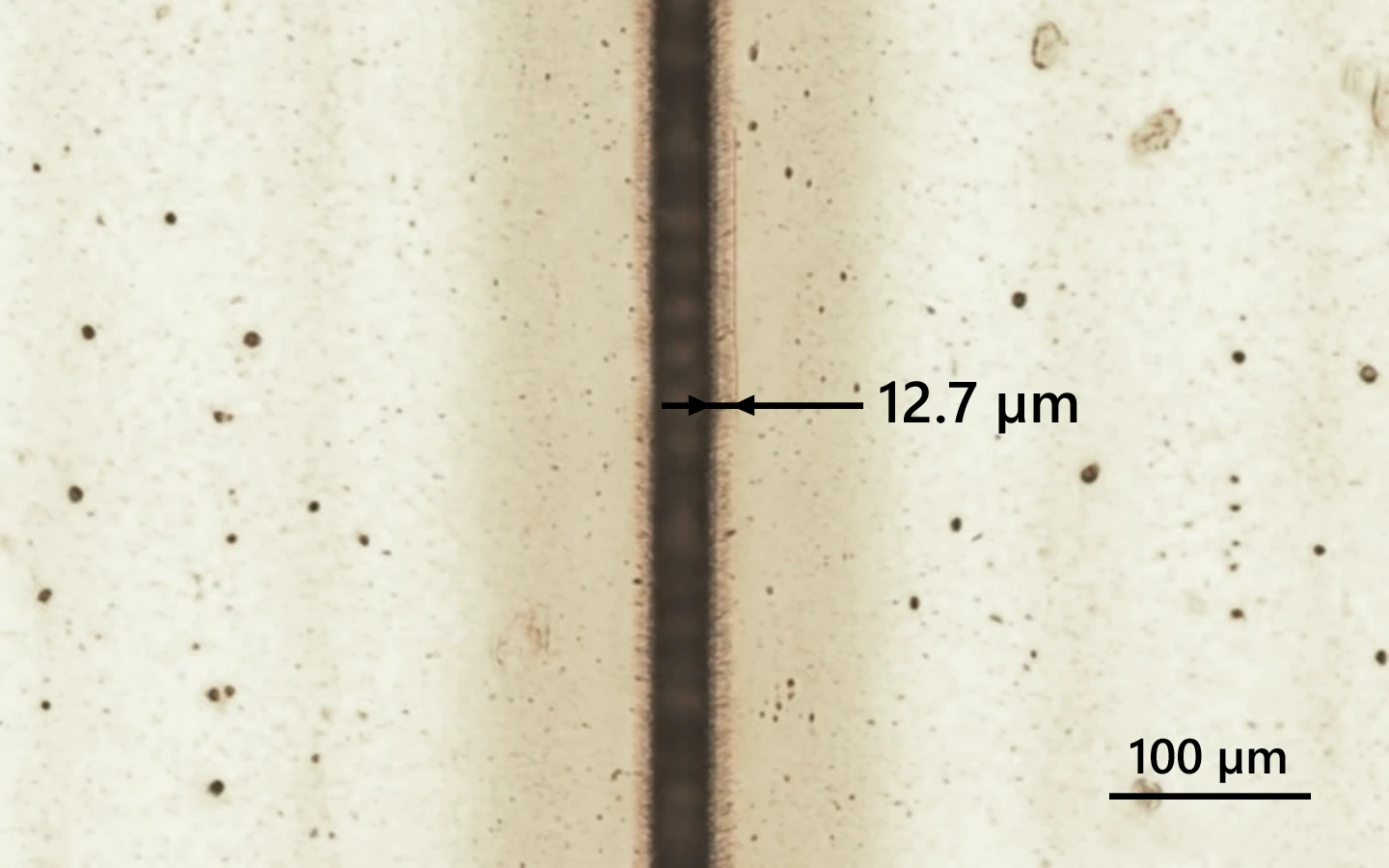
Polyimide cut with 515 nm; the heat-affected zone measures 12.7 µm.
Courtesy of FTMC.
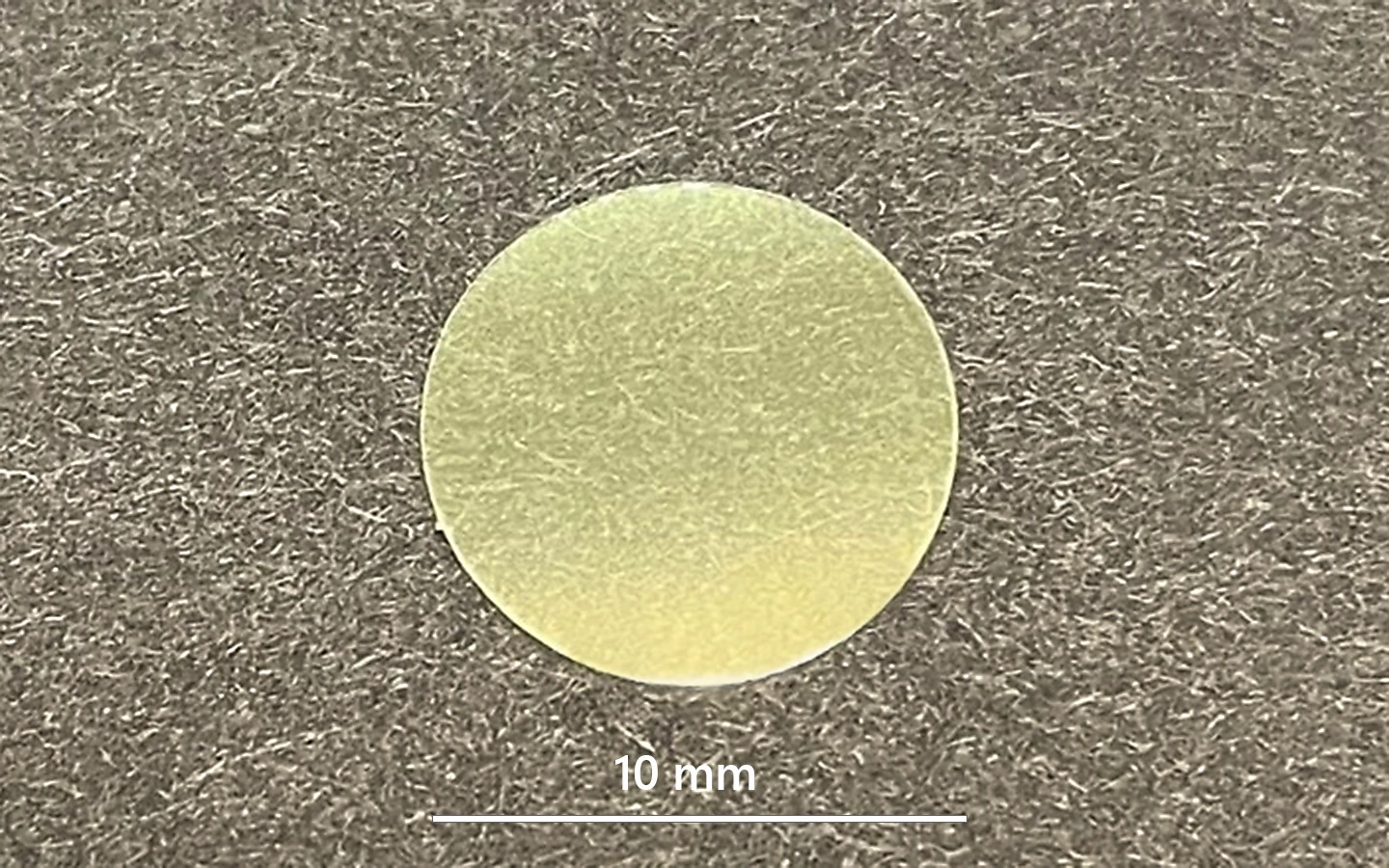
10 mm circle cut out of thin polymer film.
Courtesy of FTMC.
