Metal surface texturing
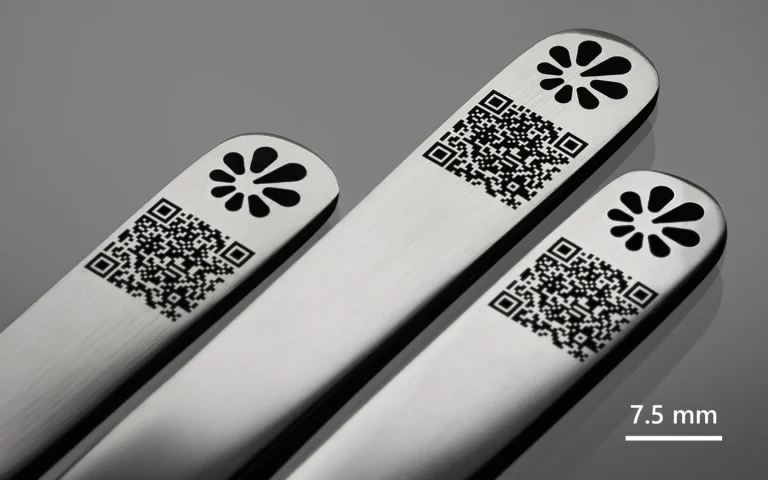
Femtosecond pulses can functionalize a metal surface. Near the ablation threshold the beam writes laser-induced periodic surface structures (LIPSS), a fine regular ripple that changes the properties of the surface itself rather than its shape. Light absorption rises, which is what makes black marking possible; wetting behavior shifts; tribological performance improves; and bacterial adhesion drops.
FemtoLux is used for this work. It textures master molds, aluminum among them, with detailed surface geometry. It also produces antibacterial surfaces: tuning the pulse energy adds nano-features on top of a coarser pattern, and the resulting hierarchical texture markedly reduces bacterial adhesion.
The same laser can also remove a texture. Working in GHz burst mode on stainless steel, 100 pulses per burst at a burst fluence of 0.15 J/cm² erased existing LIPSS and cut the average roughness Ra from 73 nm to 41 nm. Texturing and polishing therefore run on one system, without changing tools between them.

Nitinol textured with a square grid, each cell filled with LIPSS ripples.
Courtesy of UNIMORE.
Manufacturing examples

Stainless steel textured with a triangular grid; the inset shows the LIPSS filling one cell.
Courtesy of UNIMORE.

Textured aluminum molds: 3D surface maps of the dimple array and the fine ridge texture, with the finished mold plates below.
Courtesy of FTMC.