
Black/color marking of metals
Marking and coloring is one of the largest industrial uses of lasers. Femtosecond pulses structure the metal surface until it is rough and absorbs almost all incident light, which leaves a black mark of very high contrast. Because the mark is the structured metal itself rather than a coating, it also resists environmental effects.
FemtoLux produces those marks on metals such as stainless steel, which suits medical tweezers and similar instruments. Its GHz burst mode gives precise control of the thermal load induced in the sample: the number of pulses in a burst sets the thickness of the oxide layer that forms on the surface, and that thickness sets the color. Blue, cyan, green, yellow, orange, pink and red are all available without chemical additives.
The same near-threshold structuring is also used to change how a metal behaves rather than how it looks, which is covered under metal surface texturing.
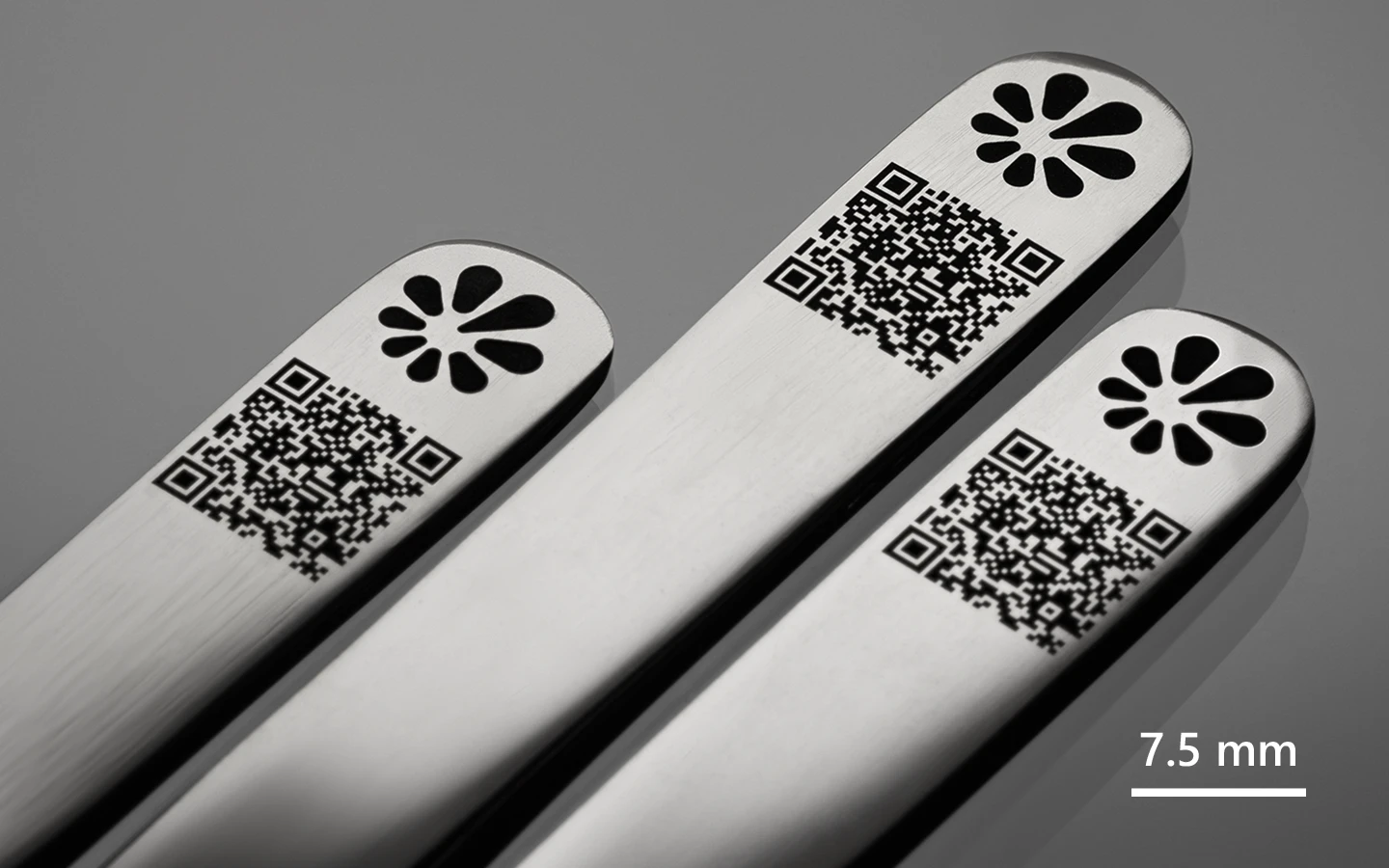
Black-marked QR codes and logos on medical tweezers.
Courtesy of FTMC.
Manufacturing examples
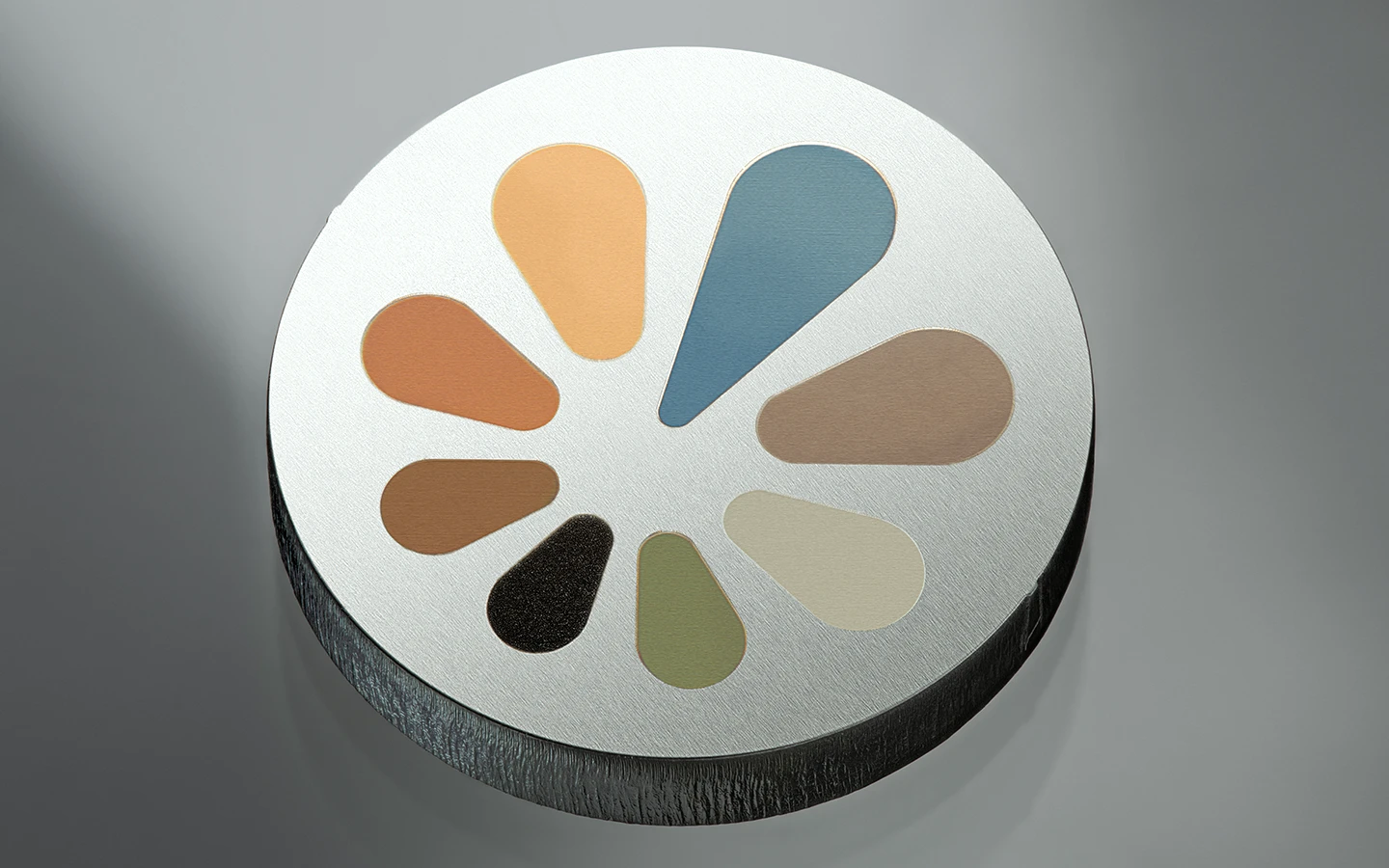
Ekspla logo on stainless steel, each of the eight petals marked in a different color.
Courtesy of Akoneer.

Color range on a titanium film: 99 squares, each marked with different laser parameters.
Courtesy of Akoneer.


