
EKSPLA has signed a Memorandum of Understanding (MoU) with CERN (the European Organization for Nuclear Research), marking a new stage in a long-standing collaboration and opening the door to deeper involvement in some of Europe’s most ambitious future scientific projects, including the Future Circular Collider (FCC).
EKSPLA lasers has been used in CERN for more than a decade. The company’s solutions are used within CERN’s infrastructure to calibrate ultra-high-precision measurement systems, an area where the highest level of technological reliability is essential.
“CERN is a place where discoveries that change the world are made — from the Higgs boson to the creation of the World Wide Web. When working with an institution of this calibre, financial aspects become secondary to the moral satisfaction. By participating in joint projects, we directly contribute to the progress of global science,” says K. Jasiūnas, Chairman of the Board of EKSPLA.
According to him, the newly signed memorandum marks an important step forward for the company.
“Projects of this scale provide us with unique knowledge, enable the development of new technologies, and help us build competencies that are later translated into top-quality products for the global market. This memorandum is an official recognition of EKSPLA’s capabilities and creates opportunities for even closer involvement in future CERN initiatives, including the ambitious Future Circular Collider,” he adds.
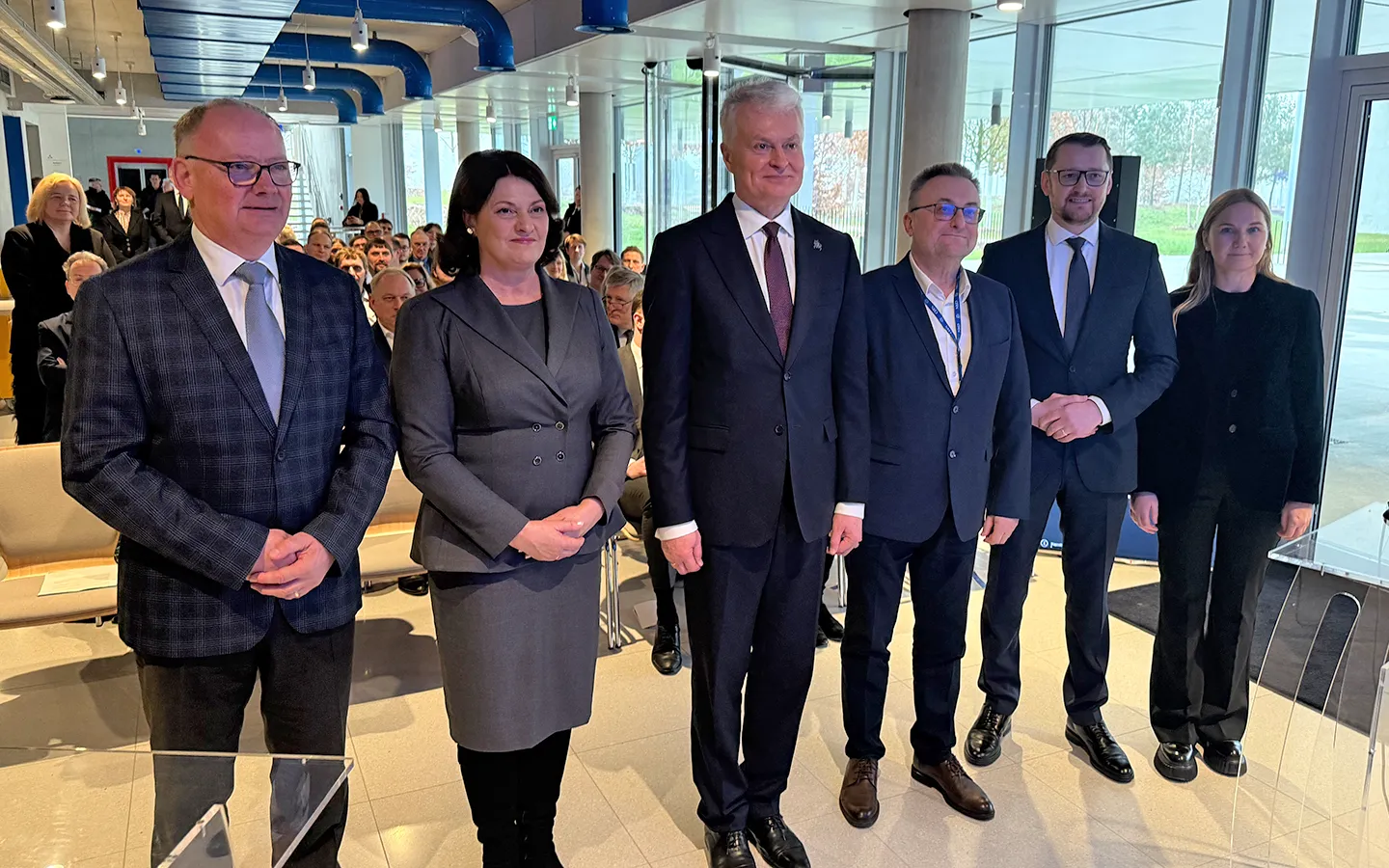
Lithuanian High-Tech Companies Expand Cooperation with CERN
The memorandum with EKSPLA was signed on January 19 in Geneva, alongside similar agreements with two other Lithuanian high-technology companies, Ostaralab and Sargasas. The agreements represent a strategic milestone in strengthening cooperation between Lithuanian business, science, and one of the world’s most advanced research organizations.
According to Lithuania’s Innovation Agency, collaboration with CERN enables Lithuanian companies not only to grow economically, but also to actively participate in shaping the future of European high technologies.
“Partnership with CERN clearly demonstrates that Lithuania’s high-technology sector is already capable of competing on a global scale. It opens doors to high value-added contracts and allows companies to develop technologies that return to the economy through innovation, exports, and well-paid jobs. Such initiatives are a targeted investment in the future of Lithuania’s economy,” says Edvinas Grikšas, Minister of the Economy and Innovation.
Speaking at the signing event in Geneva, Paulius Kamaitis, Acting Head of the Innovation Agency, emphasized that Lithuania has established itself over the past decade as an active and reliable developer of advanced technologies.
“Lithuania is home to one of the fastest-growing startup and innovation ecosystems in Central and Eastern Europe, capable of integrating rapidly into complex international value chains,” he noted.
Over the 2025 – 2026 period, Lithuanian companies have secured CERN contracts worth approximately EUR 288,000. More than ten Lithuanian firms currently supply solutions in electronics, radio frequency technologies, optics, photonics, and mechanics, confirming Lithuania’s reputation within the CERN ecosystem as a competent and reliable partner.
The signed memoranda commit EKSPLA, Ostaralab, and Sargasas to strengthening technological cooperation with CERN and exploring ways to contribute to the development of the Future Circular Collider (FCC) — one of the most ambitious scientific infrastructure projects ever planned in Europe.
About CERN
CERN, the European Organization for Nuclear Research, is one of the world’s largest and most advanced scientific laboratories, bringing together 24 member states and associated partners. Its fundamental research in physics and technological development has a major impact on global progress in industry, medicine, and information technologies.
Lithuania became an Associate Member of CERN in 2018. The country’s participation is coordinated by the Lithuanian–CERN Consortium, which supports Lithuanian companies and researchers in competing for top-level international scientific and technological projects.